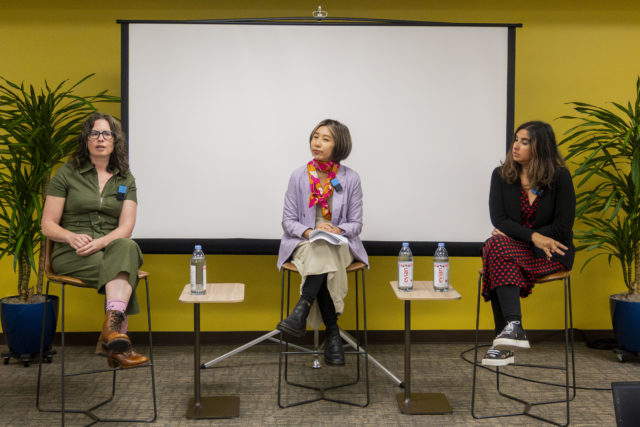
Digital humanities scholars called on researchers to follow human-centered approaches to data science at an Oct. 14 event.
Lauren Klein, a professor of data and decision sciences at Emory University, and Roopika Risam, an associate professor of digital humanities and social engagement at Dartmouth College, joined Cindy Anh Nguyen, an assistant professor of information studies, digital humanities program and Asian languages and culture at UCLA for a discussion about the digital humanities. The conversation covered topics such as research, pedagogy and AI.
She added that humanistic theories can inform technical work surrounding data science and AI practices.
“It’s really important to recognize how all of these histories are intertwined, not so that we can feel bad about our current practices and stop using them,” she said. “For me, at least, it’s to learn from the mistakes of the past so that we can do better in the future.”
Risam said during the panel that adding visual elements to data both deepens and enhances its meaning. She added that the opportunity to learn how data works and the impact of technology can lead to better decisions and usage of these tools.
Risam also said her research focuses on the relationship between colonialism and digital culture. She said her research on colonialism has offered a better way to understand present circumstances through patterns and past context.
“We have the opportunity to really learn about how data works, how the technologies we use work, and the impact they have on the world, and to educate ourselves so we can make good decisions about how we use them,” Risam said.
Following their presentations, Nguyen, an assistant professor of Asian language and culture, information studies and digital humanities, said Klein and Risam reminded the audience of the beauty of history, and the importance of staying grounded when reflecting on past communities through data.
“We connect back towards this slowness and contextualized form of history where there’s a people in a community within a specific context, a certain kind of epistemological and practice-based slowing down,” Nguyen said. “What’s beautiful about history that’s beyond the argumentative thrust is that we’re spending time to learn, which I learned so much, so I just really appreciated that space,” Nguyen said.
Sierra Talbert, a second-year doctoral student in information studies, said she attended the event because of her interest in the intersection of computer and science and gender studies.
Talbert, who is in Nguyen’s class, added that DataX – a UCLA initiative aimed at strengthening research and education across different pedagogies using data science – offers a welcoming space for students both physically and academically.
“While people from other disciplines may not be able to take a full class and devote class time and coursework time to thinking through these types of ideas, it’s nice to be able to have a forum to talk with like-minded people who are both in technical and more humanistic fields,” Talbert said.
“When we open our eyes to this really complicated and complex history, we can… make our decisions with a lot more specificity, with a lot more intention and care,” Klein said. “This results in a goal that we all share – which is more accurate and impactful science that is answering the right questions, that is speaking to the communities that we want to serve.”

Comments are closed.