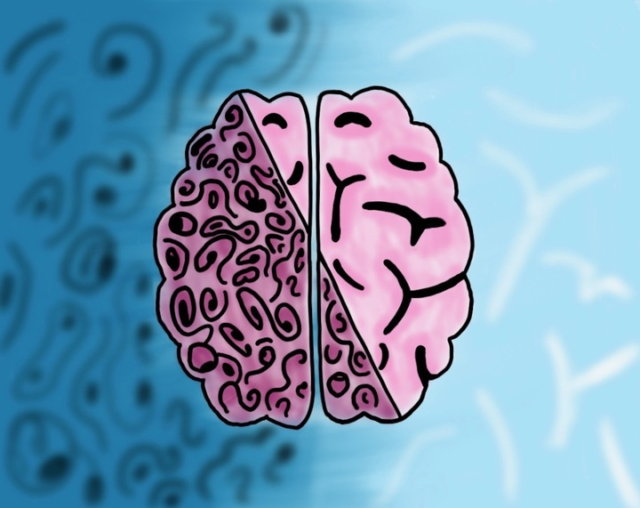
UCLA researchers found that the buildup of a key structural protein inside fruit flies’ neurons can drive aging – and that disrupting its structure may reverse aging.
The protein, actin – part of the cytoskeleton, which is the structural component of the cell – is one of the most abundant proteins in human cells, said David Walker, a professor of integrative biology and physiology. The initial finding that sparked this study was that aging flies have increased levels of F-actin in their neurons, Walker said.
G-actin subunits are the building blocks for F-actin, which provides the structural support for cells, according to ScienceDirect.
Ryo Sanabria, an assistant professor of gerontology at the University of Southern California, said this paper was significant for showing that not only is destabilizing actin bad for a cell’s structural integrity, but also overly stable actin has negative effects.
Walker said many think actin levels remain constant. Scientists are beginning to realize that they actually change in various tissues such as the muscle and the gut, said Edward Schmid, the paper’s first author.
Schmid said that in his early microscopy work, he saw increased levels of F-actin structures in flies’ aged brains compared to younger brains.
The results were so dramatic that Walker and his team could tell the flies’ brains had increased levels of F-actin structures even before conducting a statistical test for significance, he said.
The researchers then wanted to investigate this relationship further because it was not clear whether the accumulation of F-actin was a driver of this effect or was merely correlated with it, he added.
The researchers looked at different known ways to increase lifespans – such as diet restriction – and found that the brains of flies had decreased levels of F-actin, Walker said.
The researchers then moved on to experiments that stabilized F-actin, Walker added. The researchers knocked down a certain gene to reduce the buildup of F-actin, which led to improved cognition, decreased hallmarks of aging and longer lifespans, he said.
“This was a breakthrough for us because it allowed us to get beyond correlation and to establish whether the effect and accumulation was actually impacting neuronal health, brain health, brain physiology and also the overall health and well-being of the entire organism,” Walker said.
Walker said the team also found that the accumulation of F-actin in the brain disables autophagy, which Schmid said is a process that occurs within cells to recycle or remove either damaged or superfluous components within the cytosol, with this pathway being known to decline in the aging process.
When the researchers destabilized the F-actin in the neurons of a middle-aged fly that had already accumulated large amounts of the protein in its brain, they were able to restore autophagy levels and reverse several hallmarks of brain aging, Walker said. He added that this discovery was particularly striking because it meant that the researchers could reverse certain cellular hallmarks of brain aging in an already aged brain, he added.
The study seeks to understand the fundamental mechanisms of aging, Sanabria said.
An important step in translating these findings into therapeutic options would be to investigate how to deliver treatments specifically to the brain, as destabilizing actin in other tissues is harmful, they added. Their lab is looking into cell-type-specific methods to alter actin, they said.
Going forward, Schmid said he is interested in exploring why changes to actin dynamics in the brain are different from actin changes in other cell types and other tissues in the body.
“It’s really interesting how these things can be really cell type specific and get so critical in the overall health of the organism,” Schmid said.


Comments are closed.