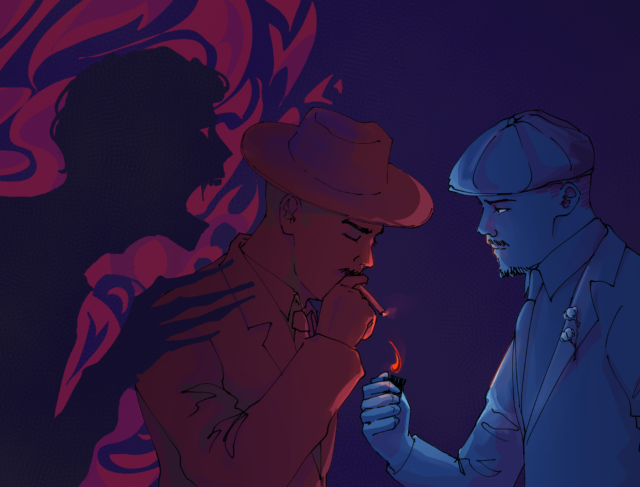
If there’s one thing to remember from the 2025 awards season, it’s the riveting melodies of “Sinners.”
Even if it did not win Best Picture, the ground-breaking film from writer-director Ryan Coogler finished a wildly successful Oscars night with four trophies from its record 16 nominations, including a Best Original Screenplay statuette and Best Actor in a Leading Role for Michael B. Jordan. While the past few months have rightfully pointed to the impact of “Sinners” heralding a new wave of recognition for the horror genre at the Oscars, an overlooked aspect of the film’s success is the promise the movie holds for the musical genre as well. Incapable of being classified as only one genre, the vitality of the “Sinners” soundtrack signals that future musicals can prevail once more in top Oscar categories.
Without a doubt, one of the elements of “Sinners” that makes the film so special is its boundless experimentation with genre. Beyond the evocative performances, the award-winning cinematography and the thoughtful exploration of race in the Jim Crow era, “Sinners” manages to balance a one-of-a-kind concoction of horror, Southern gothic, period drama, gangster and musical genres. Since the film’s release last April, repeat viewings have proved how layered the cinematic magic created by Coogler and crew really is – a thrilling yet heart-breaking, celebratory yet futuristic, altogether triumphant tour de force.
Despite the ample acclaim showered upon the film, it is curious how the rich, soulful music of “Sinners” has perhaps been down-played within the hoopla of the past several months of the awards season. Sure, “Sinners” swept every major award for Best Original Score and the film’s centerpiece song “I Lied to You” received a Best Original Song nomination supported by a spellbinding Oscars performance. Still, the narrative of the film – as an original story and as a direct challenger to “One Battle After Another” for Best Picture – did not seem to place the film’s musical elements at the forefront of conversation.
[Related: Oscars 2026: ‘One Battle After Another’ wins 6 awards, Michael B. Jordan claims Best Actor]
Beyond Ludwig Göransson’s score, the full impact of “Sinners” would be impossible without the quality of the original songs that define several integral scenes in the film. For instance, Miles Caton’s rendition of “Travelin’” brilliantly foreshadows the singing talents his character Sammie possesses – which strong enough to summon the force of evil in vampiric form. Likewise, Jayme Lawson’s unbridled take on “Pale, Pale Moon” provides the seductive bluesy croon necessary to build tension as one of the Smokestack Twins transforms into a vampire while keeping the patrons of the juke joint enraptured in a collective sweat-soaked groove.
Without its musical elements, “Sinners” might not have been as successful in its storytelling, nor would it have been able to stage a late-season alternative to “One Battle After Another.” While both films feel fresh in their own way – even coming from the same studio, Warner Bros. Pictures – the Paul Thomas Anderson action-thriller can’t contend with the layer created by the irreplaceable “Sinners” soundtrack. The momentum of “Sinners” opens doors for more attention for horror films, but just as easily can break new ground for contemporary musicals. Ten musicals have won Best Picture in the Academy’s 98-year history, but the only such victor in the past half-century was “Chicago” (2002).
Admittedly, “Sinners” is far from the only musical to be nominated for Best Picture in recent memory. Other films, like Bradley Cooper’s adaptation of “A Star Is Born” (2018) or Steven Spielberg’s take on “West Side Story” (2021) have been nominated for the Oscars’ biggest prize, and comedies such as “Barbie” (2023) have featured plentiful music woven throughout the story to enhance the development of individual characters. Just last year, both “Emilia Pérez” and “Wicked” were in the running for Best Picture and collected double-digit nominations.
[Related: Second take: ‘Sinners’ dominates Oscars 2026, signaling potential breakthrough for horror films]
The trouble with these aforementioned musicals – despite each picking up an Oscar or two along the way – is that their respective films were never in the front of the Best Picture contenders. “Sinners” represents a musical that spent almost a year in direct conversation for winning the biggest award in mainstream film. That is no small feat for a movie containing multiple extended song-and-dance sequences that might be misinterpreted as frivolous or distracting.
Prior to “Sinners,” the closest that a musical has come to winning Best Picture in recent memory was probably Damien Chazelle’s “La La Land” (2016). Before the notorious Oscars gaffe where “Moonlight” actually – and deservedly – won Best Picture, the romantic comedy-drama starring Ryan Gosling and Emma Stone seemed to be a front-runner because of precursor wins at the Golden Globes and BAFTAs that year. “La La Land” still won six Oscars, but was a relatively traditional, family-friendly musical compared to the genre-blending final product of “Sinners.” Comparing the two directly minimizes the artistic achievements of each, but the world-building accomplished by the music of “Sinners” feels wholly original, rather than referential to the past.
The Best Picture loss for “Sinners,” while unsurprising when faced with the juggernaut of “One Battle After Another,” does not spell disaster for the musical genre. Another rousing musical might surprise in the near future and charge forward to claim Best Picture, or it might be many years until such a film breaks the drought that has lasted since “Chicago” won. Regardless, there is a good chance that future musicals will not be possible without the genre boundaries being broken by “Sinners.” Among its many achievements, the film has raised the bar for the musical genre by reminding viewers – and hopefully studios – of the flexibility and enduring significance of the genre.
It’s been almost a year since “Sinners” was first released in theaters, but the power of its transformative musical qualities will continue to reverberate for those willing to listen.



Comments are closed.