This post was updated May 29 at 8:00 p.m.
On April 22, 2022, during my senior year of high school, a lone gunman shot more than two hundred rounds of ammunition into my school. My peers and I joined a survivors club none of us wanted to be a part of.
The network of school shooting survivors is extensive. At least 24 school shootings have occurred in the United States this year. The years 2021, 2022, 2023 and 2024 each set a new record for school shootings since 2008, according to CNN.
As the U.S. continues to experience a surge of gun violence, American universities have an increased responsibility to protect their students from safety threats. In the wake of recent shootings at major colleges, including Brown University and Old Dominion University, UCLA must do more to prevent gun violence on its campus.
Researchers at the American College of Surgeons studied school shootings over a period of 53 years in America. They discovered that school shooting frequency have steadily increased over time. The epidemic of gun violence in our schools has left a wake of victims, who carry consistent fears of repeat violence, in its path.
Ron Avi Astor, a professor of social welfare, said some of this rise in gun violence is potentially due to the increase in accessible technology that can spread harmful ideologies and rhetoric, as well as the temptation for media attention.
“It corresponds directly with the ownership of smartphones,” Astor said.
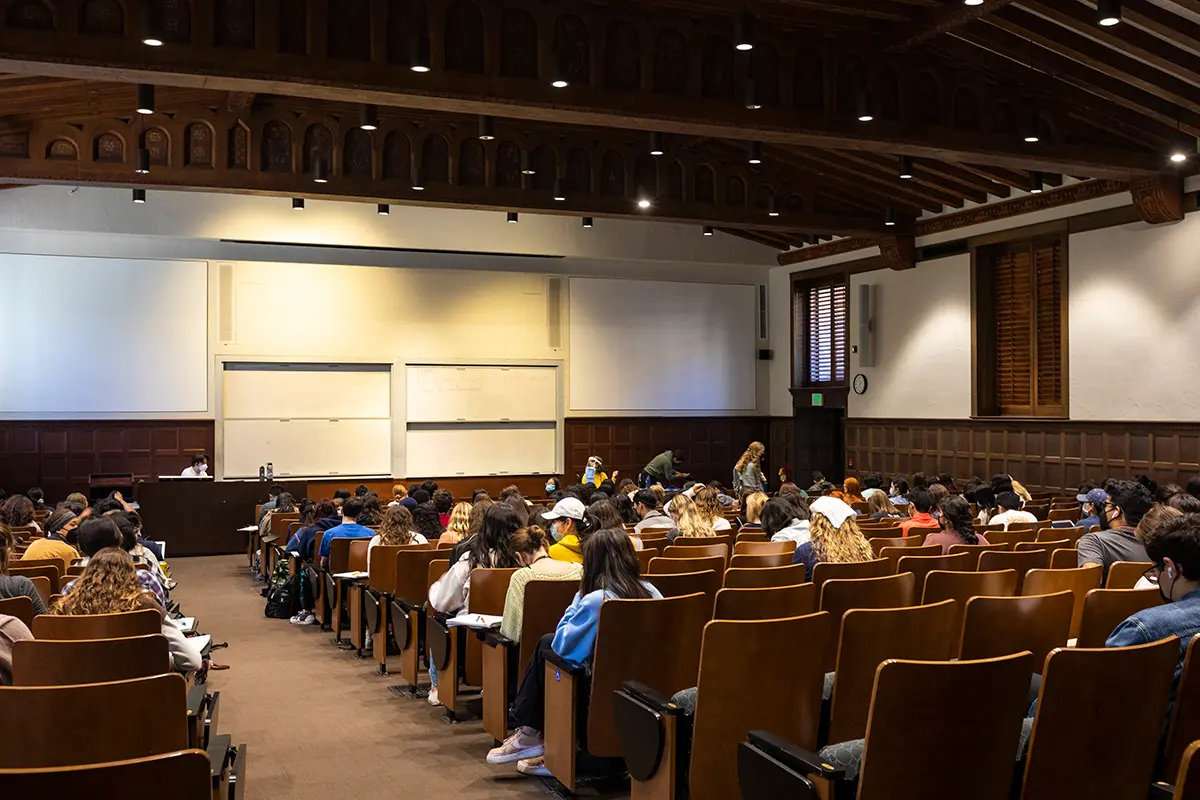
Before 2022, I never searched for exits in my classrooms. Now, each time I enter a lecture hall, I find the easiest way out. After experiencing a school shooting, UCLA’s public campus only amplifies this instinct and feeling of vulnerability.
Felix Bailey, a first-year psychobiology student, said she sometimes hears news of shootings multiple times a week.
“Seeing all of the information and news, I would say that I am a lot more anxious,” Bailey added.
She added that the university is not doing enough to keep its students safe.
“There is always room for improvement,” Bailey said.
When asked for comment on how UCLA addresses concerns about gun violence, safety protocols, emergency response strategies or alternative student resources, a UCLA spokesperson did not provide a statement and directed the request to UCPD, which did not respond.
California is not immune to gun violence, despite having the strictest gun laws in the nation.
[Related: Opinion: UCLA must be transparent about safety measures, promote active shooter protocols]
One in six California adults has a gun in their home, and one in 13 of California adult gun owners has a firearm that is loaded and unlocked, according to UCLA’s Center for Health Policy Research. Lawmakers in other states are now pushing for laws that would allow students, staff and visitors to carry weapons on public campuses.
“Because the Supreme Court has been expanding Second Amendment rights, it’s conceivable that the Supreme Court will, in time, say that students residing on public school campuses have a right to have a firearm in their homes for personal protection,” said Adam Winkler, a Connell professor of law and specialist in American constitutional law, the Supreme Court and gun policy.
While these threats may not currently be present, we must prepare ourselves for a very real future in which they might appear.
“That would mean that students in UCLA dorms would have a right to have a gun on their campus, and UCLA would not have the ability to prohibit those firearms,” he added. “That hasn’t happened yet, but a lot of the logic of the court opinions that we’re seeing could lead to that result.”
UCLA and all universities must take action.
Small steps toward increased security, such as requiring a BruinCard to enter lecture halls or classrooms, or simply informing students of emergency protocols, would enhance student security.
Astor said solutions should not be limited to physical security. Investing in mental health education, teaching students and faculty to recognize people in distress and providing a safe, accessible space for reporting is critical, he added.
It is important for the UCLA community to know warning signs and to have a space to acknowledge potential dangers. Astor said these signs include suicidal ideation, collecting related media, posting media, making videos, writing a manifesto or praising prior shooters.
Classrooms are for learning, not lockdown. As students are forced to grapple with the potential threat of gun violence while attending classes, schools must respond accordingly.



Comments are closed.