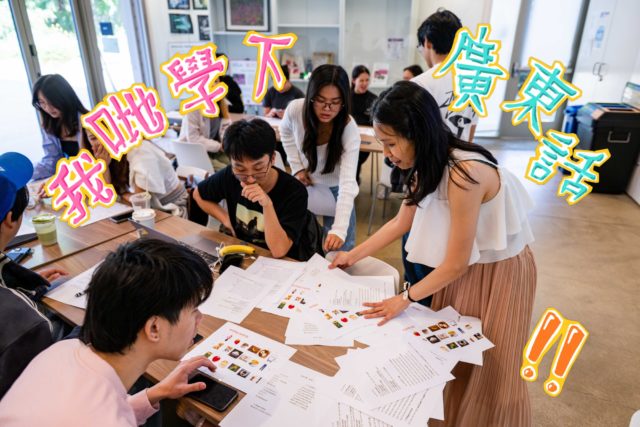
As campus wound down for the weekend this spring, one classroom buzzed with eager students, cultural connection and Cantonese conversation.
Cheer Wu, a doctoral student in Chinese linguistics, began teaching an informal Cantonese course every Friday after meeting Cantonese speakers as a teaching assistant in the Chinese department. Many of her students asked why UCLA did not offer any Cantonese classes, which Wu said inspired her to create the course.
UCLA has not officially offered Cantonese classes since 1984, a UCLA spokesperson said in an emailed statement. However, Michelle Trinh, a second-year psychology student who took Wu’s class, said Save Cantonese at UCLA, a student-led organization advocating for the reinstatement of Cantonese classes, helped Wu’s unofficial class reach a wider range of students.
Wu said she received 140 student responses to a form that gauged interest for the potential course.
“I was very surprised, in a good way,” she said. “I had to pick the first 30 students, but it turns out more than 30 showed up.”
Cantonese, a language primarily spoken in China, is waning because of the Chinese government’s push for more people to speak Mandarin and changing migration patterns, according to the Associated Press.
The university previously offered Introduction to Cantonese courses in winter 1979, though it currently does not have information about the rationale behind the class’s elimination, the spokesperson added in the statement.
“UCLA is aware of student interest in Cantonese and continues to offer instruction and programming across a wide range of languages and cultures,” the spokesperson said in the statement.
At UCLA, several less commonly taught language classes have been downsized due to budget cuts at the state and federal levels. Those courses, including Czech and Russian, have faced low student enrollment, which puts them at risk of being eliminated, faculty said.
[Related: UCLA foreign language faculty, students criticize language program cuts]
While many of the students in Wu’s class are heritage speakers or grew up in Cantonese households, some have no Cantonese background and are just curious about learning a new language, she said.
Charlotte Pham, a first-year linguistics and computer science student, said she had no prior Cantonese experience before joining Wu’s class. However, Pham added that she was interested in learning the language, as well as Wu’s efforts to bring back Cantonese classes at UCLA.
Since joining the class, Pham said she has enjoyed speaking with other students in Cantonese.
“It’s been really helpful to have people around you speak a little more Cantonese so you can get a better snapshot of how people use language in real life,” she said. “We’re focusing a lot more on functional phrases and functional uses of real life.”
Pham said she enjoys being part of a community with the shared goals of practicing Cantonese and learning more about their heritage along the way.
“It’s been cool to meet a lot of people from different backgrounds … and trying to reconnect with our culture,” she said. “It’s nice to find a lot of people who also have that motivation and passion.”
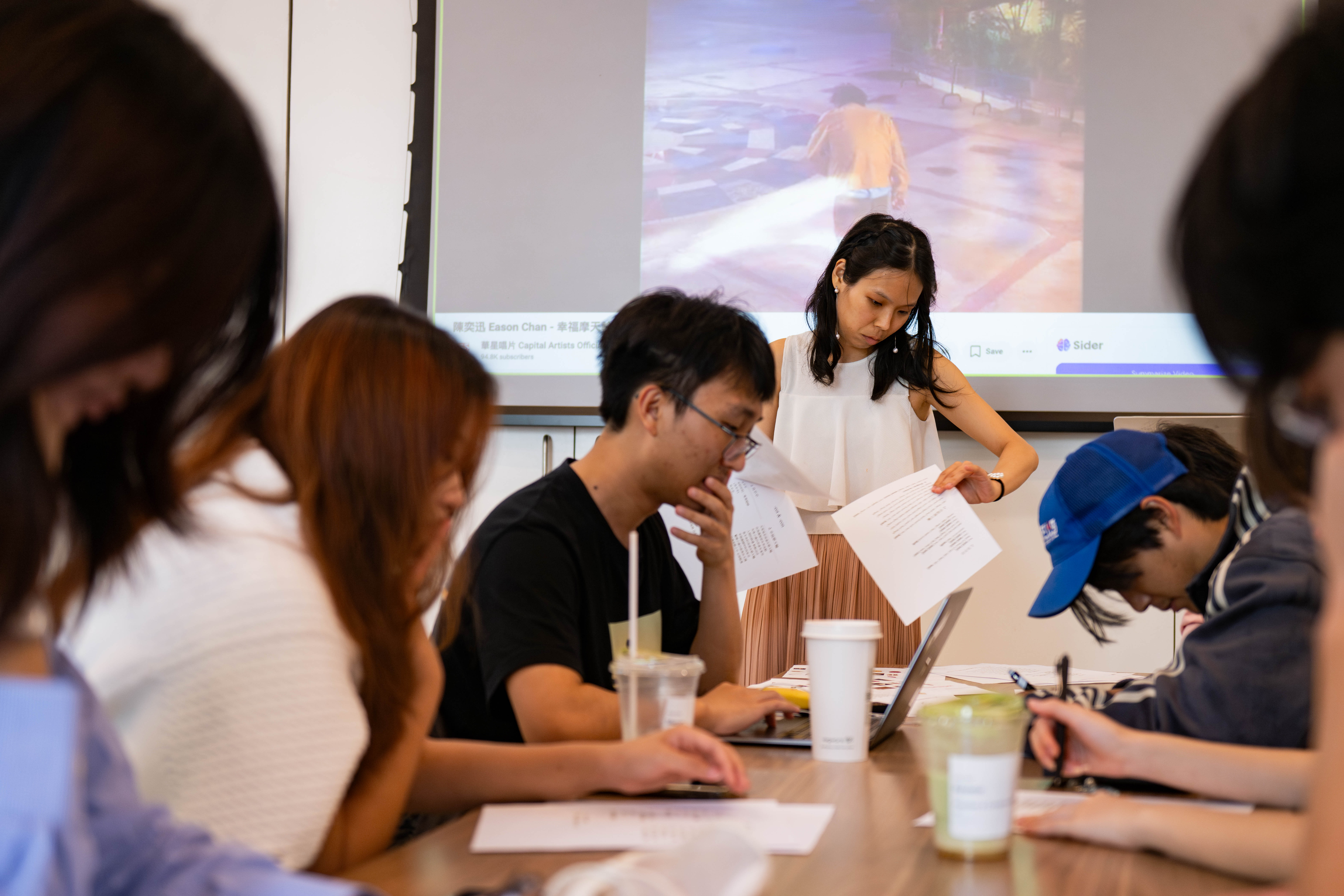
Wu begins each class by reviewing Jyutping, the Cantonese romanization system that converts characters into phonetic spelling using the Roman alphabet, along with listening to Cantonese songs and speaking in pairs or groups.
The class also focuses on teaching students about pronunciation because Cantonese pronunciations differ from those in Mandarin Chinese, Wu added.
Trinh said she learned Mandarin at home and at a Chinese Saturday school as a child. Learning the language as a child felt more like a chore than a way to connect with her heritage, she added.

However, Trinh said taking Wu’s class has strengthened her relationship with her mother, who also speaks Cantonese. Trinh added that she taught her mom about what she learned in class and often sings Cantonese songs with her in the car.
“I’m realizing how special and important it is to maintain languages as a means to connect with other people that are around you,” she said. “I’m really grateful that we have this at UCLA.”
Wu said the UCLA Asia Pacific Center has supported the informal class by helping her find classroom space. The center is also working toward creating an endowment to preserve Cantonese programming at UCLA, said Jeannie Chen, the center’s administrator.
“Ultimately, if we get an endowment, that would be over a million dollars,” Chen said. “That can sustain Cantonese education and cultural programming at UCLA in perpetuity.”
Chen said she believes UCLA’s Cantonese programming lags behind departments at other universities, including UC Berkeley and Stanford – both of which have sustained programs for the language.
“They (UCLA’s Chinese cultural student associations) just need a convergence point and the momentum of not just the students, but also our community members, our faculty and our administrators,” Chen said. “You have faculty who have a platform and students who have a voice.”
Wu said the most rewarding part of her class is seeing her students improve and build community.
“That’s really fulfilling to see that they could take advantage or take this opportunity to fully connect with their identity, not just part of it – but fully embrace that,” Wu said.


Comments are closed.