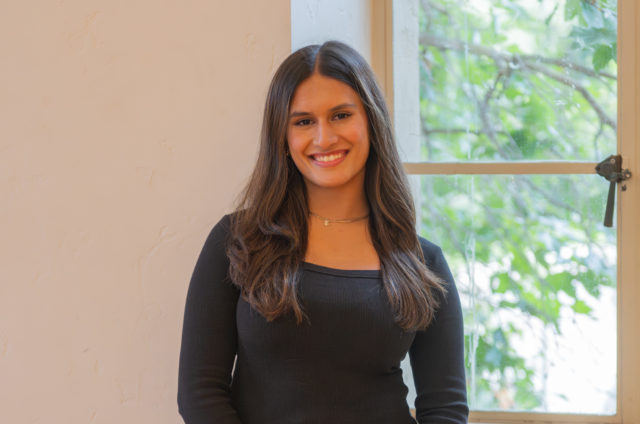
Artist Mahek Jindani has brought a global perspective to dance at UCLA.
The fourth-year applied linguistics and dance student – who is of Indian heritage – was born in the Democratic Republic of the Congo and spent the first 15 years of her life in the nation’s capital of Kinshasa. Her family later relocated to Dubai in the United Arab Emirates before she spent her first two years of college at UC Riverside and later transferred to UCLA. With graduation approaching, Jindani – a lifelong dancer – is continuing to fuse dance styles while working on a short dance film called “(be)longing.”
“I’m really big about creating pieces that force people to think about something,” Jindani said. “I’m known for making my audiences uncomfortable in some performances.”
Jindani said her early interest in dance stemmed from watching reality television series such as “Dance India Dance” with her parents and subsequently trying to prepare choreography based on the show. She said she began teaching herself to dance when she was about 5 years old and started taking ballet classes at age 9. During the COVID-19 pandemic, her interests expanded to K-pop and hip-hop styles before she was able to explore hula and West African dance in college.
[Related: Spring Sing 2026: Synthesis Dance to return with an electrifying performance]
Becoming more well-versed in West African dance throughout college has been impactful, Jindani said, even if the music and movements are different from the Afrobeats tunes and traditional Congolese dances she learned as a child. Movements focused on daily gestures, such as carrying a basket on one’s head, felt familiar, she said. Jindani added that she especially loves the drums and rhythms of West African music because they remind her of home.
“I love stretching on the floor as we’re starting,” Jindani said. “The drummers are also warming up, so we have live music and you can just feel the rhythms vibrating under you, and something about that just keeps me feeling alive, keeps me feeling present in there, which I love.”
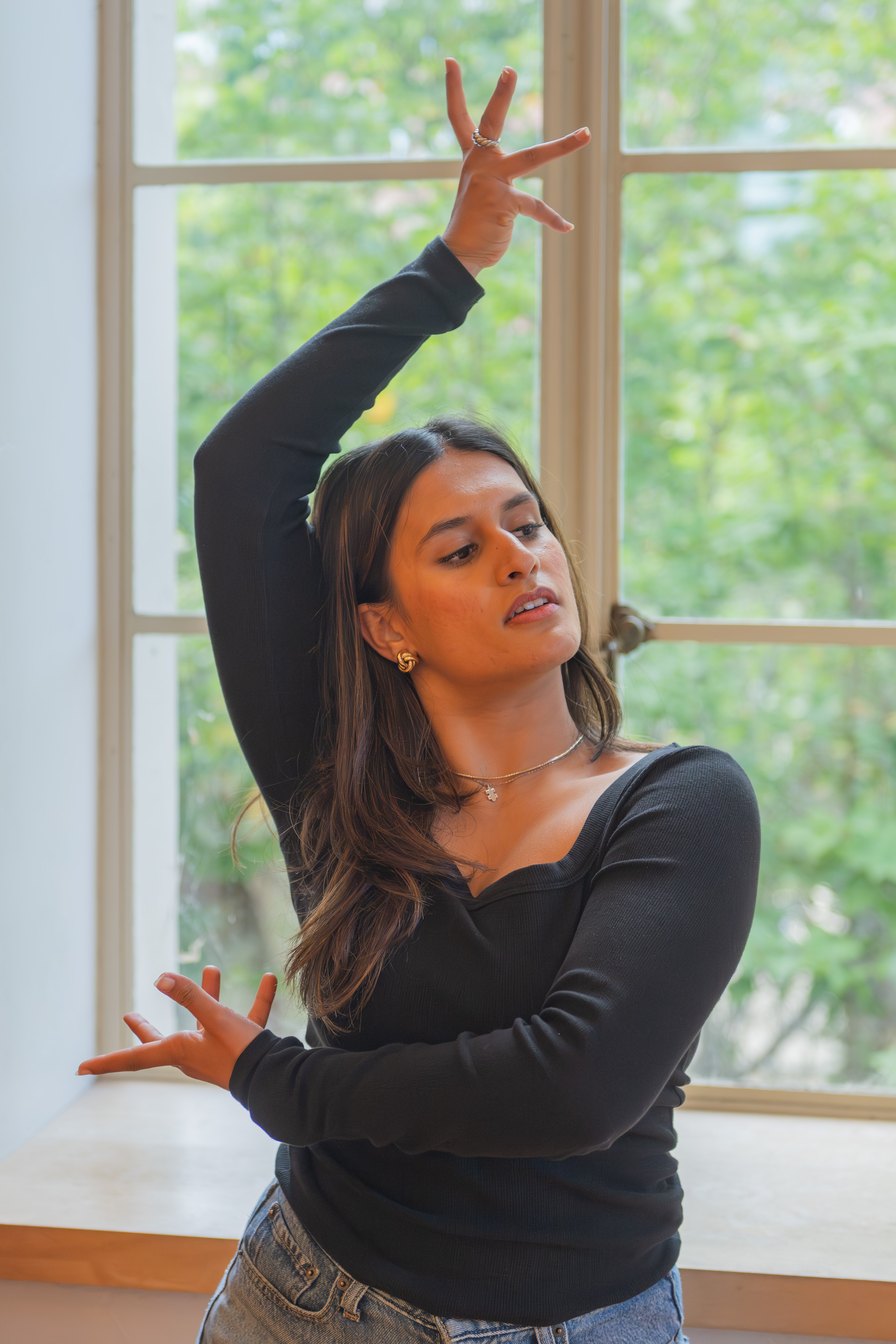
Shobha Blossey, a second-year dance and psychology student, said she met and approached Jindani on the first day of an introductory dance class they shared in fall 2024. The two have since formed a friendship through lunches together and dance collaborations, she said. Blossey said her style is different from Jindani’s – centered in contemporary modern dance compared to Jindani’s background in Afrodiasporic dances – but they connected over their shared Indian heritage. Blossey said she practices bharatanatyam, a dance style originating from southern India, whereas Jindani practices garba, a Northern Indian style.
Jindani’s garba is upbeat, with lots of bouncing and jumping, Blossey said. The traditional folk dance – originating from the Indian state of Gujarat – is circular and always moving, with dancers clapping, spinning and sometimes hitting dandiya sticks together. Jindani said the choreography, which reminds her of her father, can sometimes expand into multiple concentric circles moving at different speeds. Jindani has merged garba and West African dance styles while choreographing at UCLA, Blossey added.
Blossey said her connection with Jindani has continued to grow through the classes they’ve taken together, as well as dancing at events such as the annual student-run production WACsmash. Jindani dances with freedom and lightness that feels joyful while drawing the audience in, Blossey added. Beyond Jindani’s kindness and understanding as a peer, she is a dancer with a strong instinct for how dances should be visually presented, Blossey said.
“She really has a vision of what she wants things to look like,” Blossey said. “She has a really visual brain and a really cool way of envisioning things as pictures of what the vibe is.”
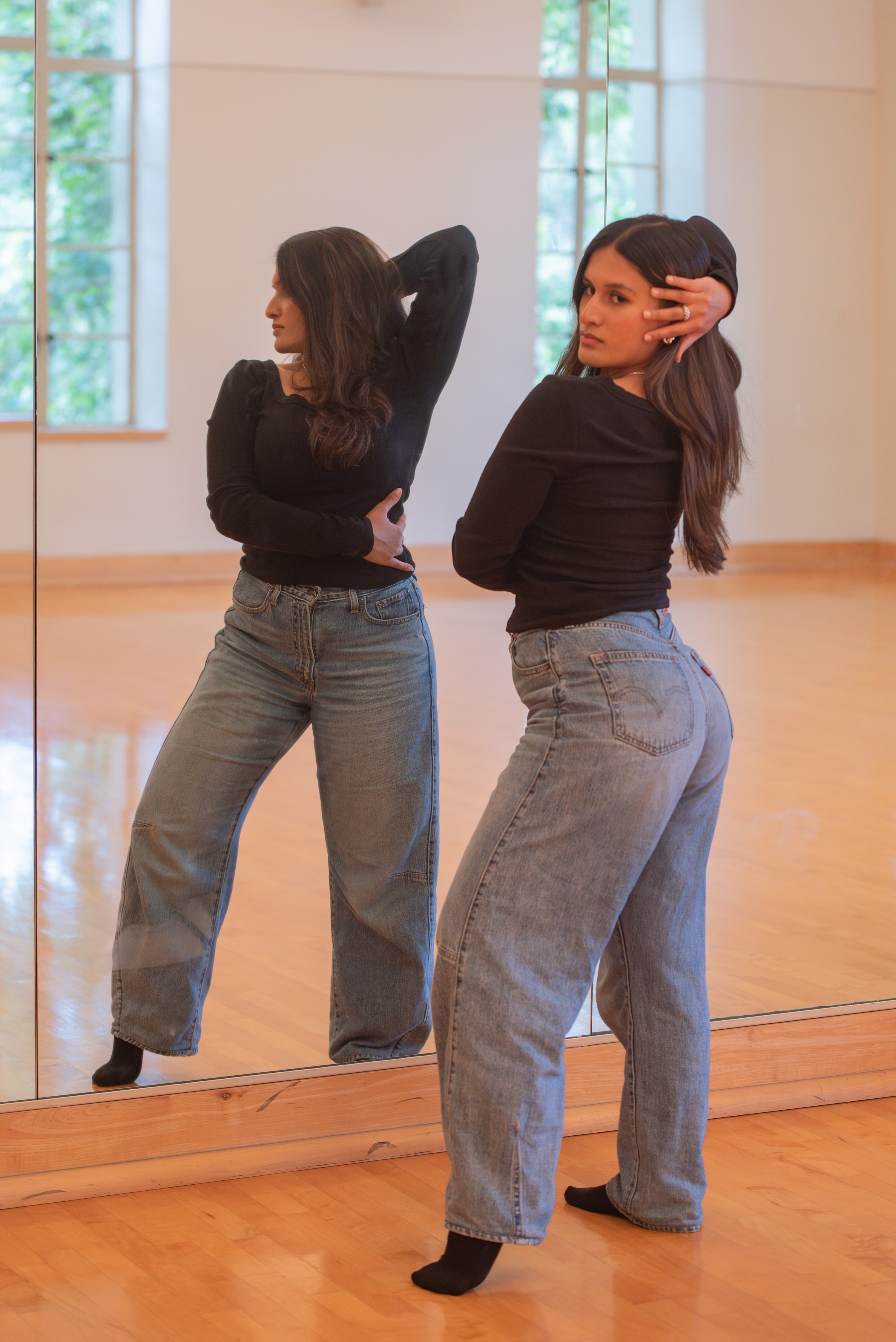
That aptitude has expanded to Jindani’s development of “(be)longing,” a dance film she said will be seven to 10 minutes long and screened in the fall. Jindani said this is her first dance film but added that she made short films in middle and high school. The parentheses included in the title of “(be)longing” are meant to capture the spirit of both belonging and longing. The concept is particularly timely for Jindani, who said she has thought more about loneliness and missing home as she decides if she wants to stay in Los Angeles after graduation. She said she has recruited dancers who share a longing for home, some of whom live out of state and others who cannot go back to their homes outside of the country altogether.
“A lot of these pains that we’re all feeling being away from home, whether you’re a 16-hour flight away from home like me, or you actually live a three-hour drive away, I think there’s a lot that we have to go through,” Jindani said. “I wanted to take all of these feelings and put it into a film.”
[Related: UCLA’s Shanti Wimmer reflects on freedom, vulnerability in latest single ‘Ethan’]
To help prepare the dancers for the film, Jindani said she sent out a survey asking questions about each dancer’s definition of home. Rather than imposing her story onto others, Jindani said she is filming scenes that remind each dancer of home, such as people eating food in an apartment or showing seashells at the beach. Jindani also asked questions about what the sensation of missing home physically feels like and how that can help inspire the dancers’ movements as she choreographs, she said. The film is in progress, so Jindani said she plans to spend the summer editing and color-grading footage.
In addition to leading dance projects, Jindani has danced for others at UCLA on several occasions. Gilberto Martinez Martinez, Jindani’s former teaching assistant, said she stands out because of her willingness to experiment with different dance styles and body movements. The master’s of fine arts candidate in choreographic inquiry said he recruited Jindani as one of the dancers for his performance thesis – a modern contemporary Latin social dance performed in April called “¿Con Qué Se Come?” Jindani was an active collaborator and choreographer, spending at least 12 hours a week working on “¿Con Qué Se Come?” in addition to her other dance projects, Martinez said.
“Her dance is very lighthearted. It’s very warm. It is an open invitation to experiencing an emotional storyline that’s posed with questions of choreographic embodiment,” Martinez said. “Mahek provides almost a theatrical experience that – regardless of our body of knowledge of dance – we’re going to feel emotional connection.”

Comments are closed.