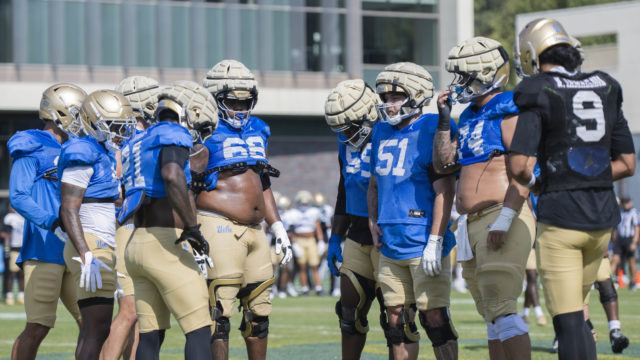
Competition is the natural byproduct of sports.
NFL teams battle for 18 weeks for a spot in the postseason and a chance to reach the Super Bowl.
Premier League squads vie to either avoid relegation or top the end-of-season table.
Golfers fight internal struggles and bouts with the course to hoist a trophy or sport a green jacket.
But few places use competition to the extent that UCLA football has in the Bob Chesney era.
It has only been nearly six months since the newly minted head football coach took the stand at the Meyer and Rene Luskin Conference Center and promised the Bruin faithful that he would right the sails of a program on the verge of sinking, coming off a 3-9 campaign that was filled with more tumultuous moments than fond memories.
[Related: UCLA introduces Bob Chesney as head football coach, instills hope in Bruin community]
And ever since Chesney took his first step in Westwood, competition has been the mantra, the lifeblood and the foundation on which he is building his new program.
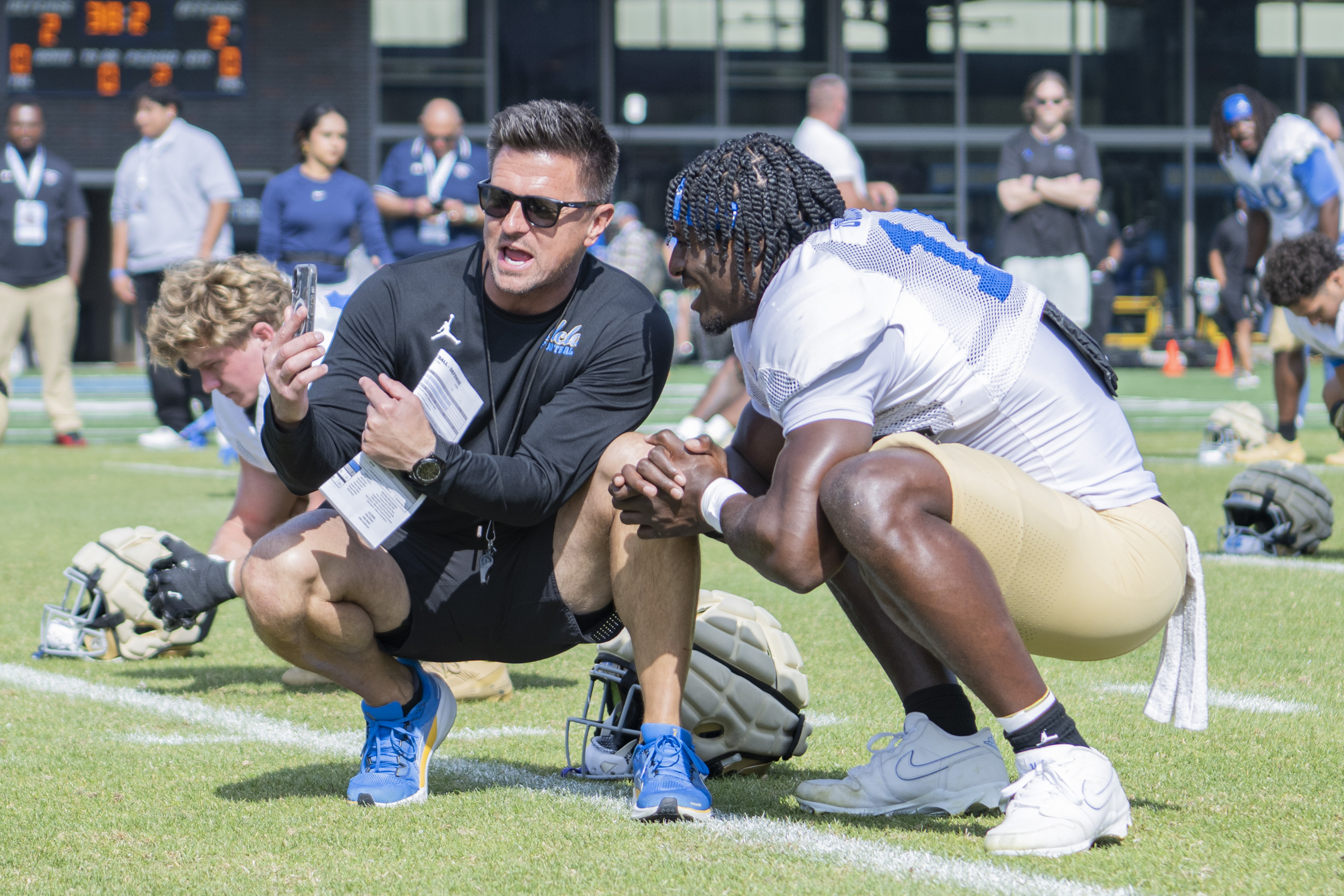
“There’s nothing it’s (competition is) not about this program,” Chesney said at spring practice on April 7. “In the weight room, the way we sit in our meetings, the way our lockers are kept, every single thing is a competition. Every single thing is going to be graded and judged and held to a high standard, and accountability follows it. I want Saturdays to feel as much like a Tuesday and Wednesday as humanly possible.”
[Related: Competition on and off the field energizes UCLA football at spring practice]
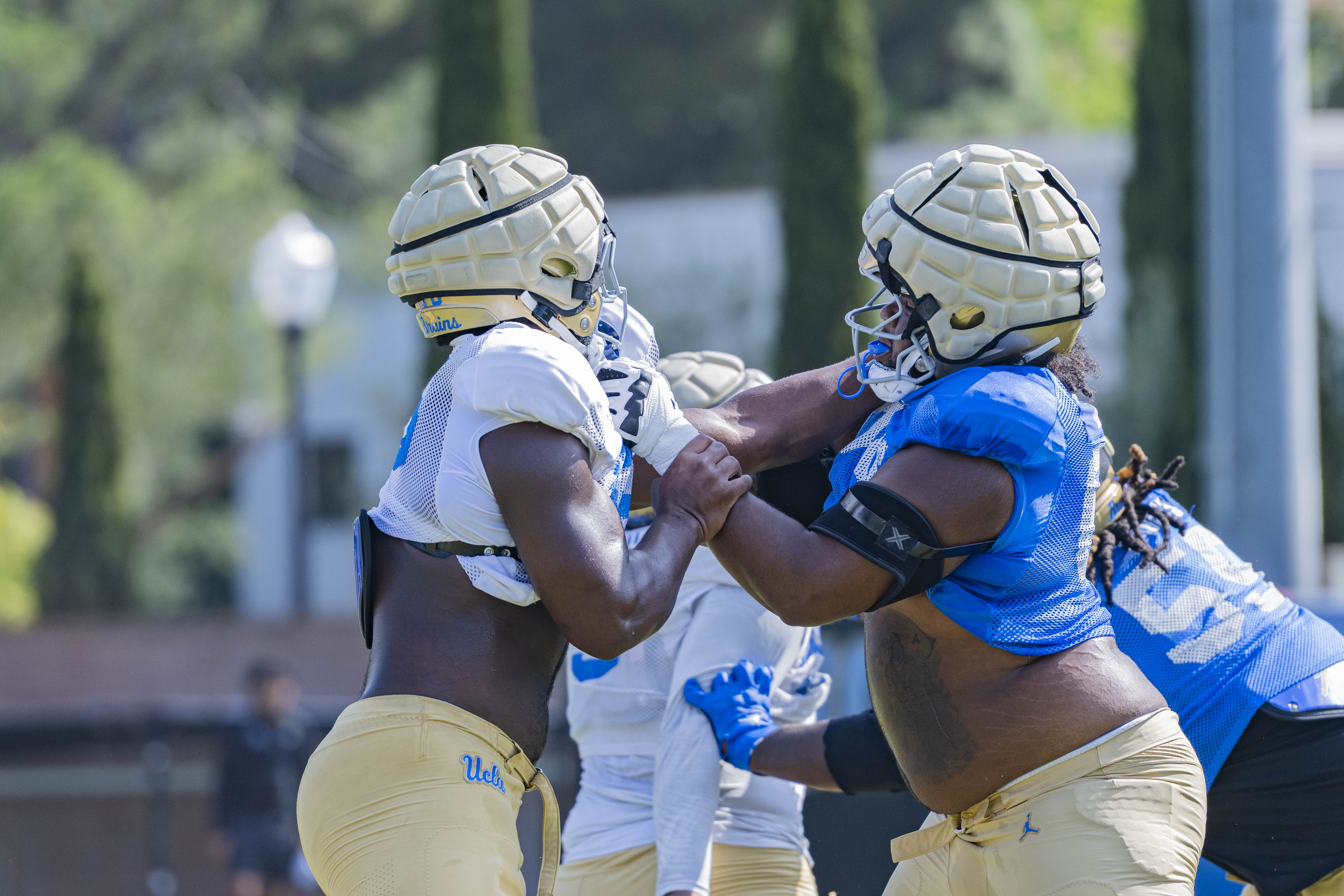
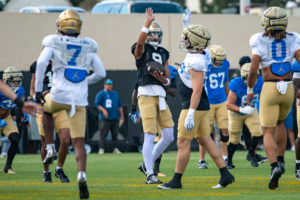
Throughout the entirety of spring camp, Chesney has set aside designated “compete” periods where individuals, position groups or entire sides of the field battle against one another in organized drills and games.
Pass catchers and defensive backs fought in one-on-one battles. The offense faced the defense in red zone competitions. The defensive and offensive lines battled at the line of scrimmage, seeing who could win pass rush reps. Skill players took part in Oklahoma drills against linebackers and defensive backs. And kickers and special teamers even joined the games, with players splitting up to support different sides.
“We compete – that’s the name of the game,” said senior wide receiver Landon Ellis. “Every high-level football player wants to compete at all times, and that’s what we do. That’s what he preaches, day in and day out, and they (the coaching staff) just bring a positive energy.”
Even before the Bruins took the field for spring practice, Chesney and his staff made random assortments of teams with players from different phases of the game that competed in speed drills and in the weight room, with the winning team getting served surf and turf and the losing team getting hot dogs and chicken tenders at a team dinner.
And it is this approach that Chesney brings to every day of training that not only sets him apart from everyone else, but helps set the expectations and keep players accountable, said offensive coordinator Dean Kennedy.
“Coach Ches (Chesney), in terms of setting the culture, is the best in the business, and making sure that people believe in themselves,” Kennedy said. “Across the board, there’s no one better than him, so it kind of obviously starts with him, and then it trickles down. Everybody being together and knowing what the expectations are from the program standpoint only helps expedite the process a little faster.”
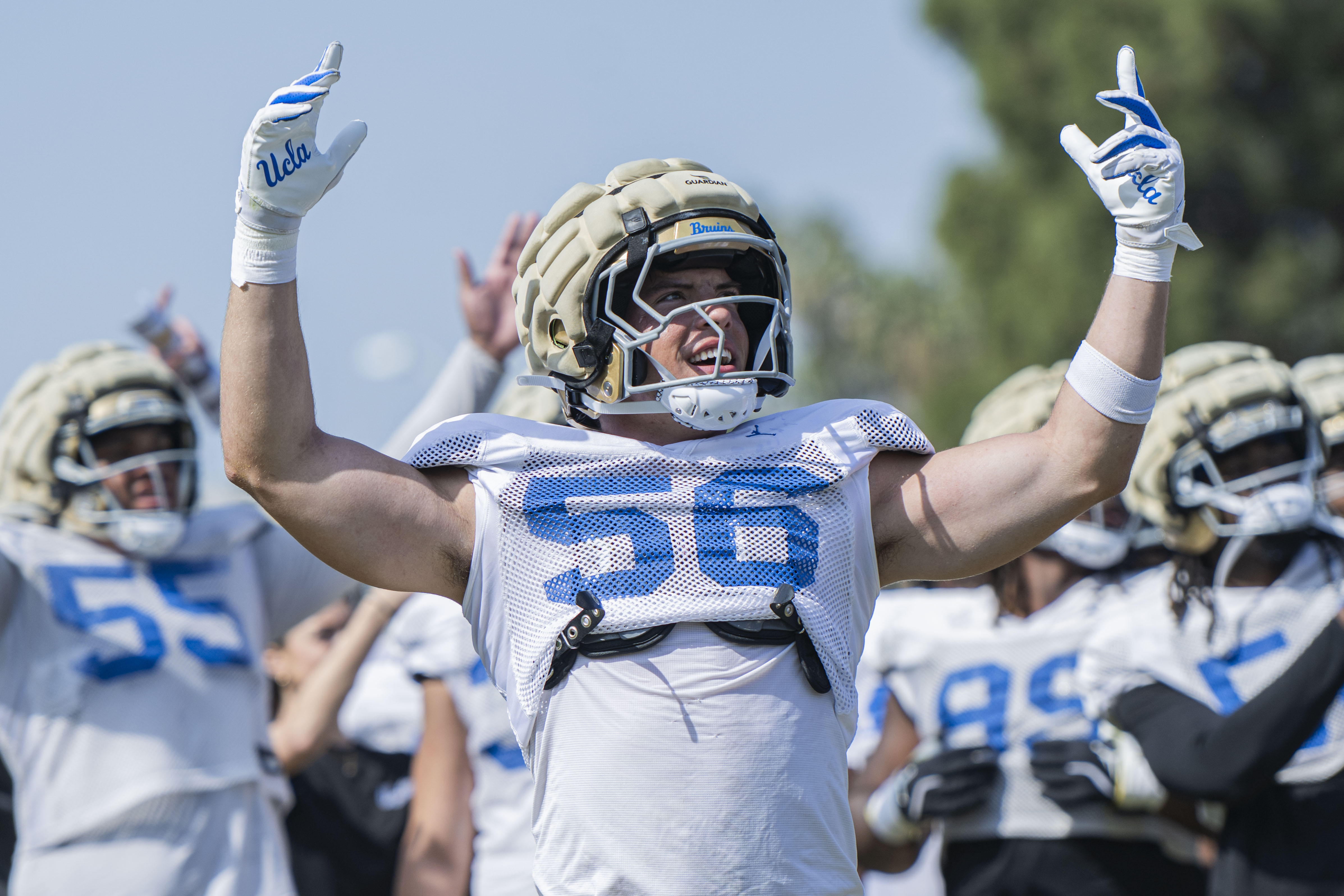
Chesney’s cultivation of competition has taken little time to sow its seed throughout the newly constructed roster – one that features 55 newcomers, including 43 transfers and 12 first-year Bruins.
Outside of recruiting new players, Chesney’s emphasis on competition was also integral to keeping the Bruins in the blue and gold, including sophomore linebacker Scott Taylor, who stressed the importance of clearly knowing where one stands in the program.
“I feed off competition, so that’s another thing we talked about when I decided to come back here,” Taylor said. “He just builds this program off competition, so everything is scored, every rep in the weight room, every rep on the field, every time you need to clean your locker, every test in the winter to know the scheme, everything is scored and everything is measured, and that – being able to track everything – it’s a lot of clarity and helps you know where you stand.”
On a completely revamped squad, eliminating uncertainty in areas for improvement and people’s roles is crucial in establishing trust between players and coaches.
Competition has fundamentally changed the environment in which the Bruins are working.
Expectations are heightened.
Intensity refuses to flatline.
The juices and raw emotions are palpable.
But through it all, the Bruins have stayed one, starting quarterback and redshirt junior Nico Iamaleava said, using competitive energy to feed their love for the game and for each other rather than have it tear at the fibers that connect teammates.
In fact, the competition periods have allowed leaders to come to the forefront, grabbing the moments that competition elicits and steering it into learning and bonding experiences.
“We had this one-on-one period where it was a competition between the O-line and D-line, and what we talked about with the quarterbacks was, ‘Hey, that is a leadership period for you. That’s a time to make sure that you guys tell the offensive line how much you’re with them now, to bring everybody else involved,’” Kennedy said. “And what I was happy (about) in that individual period, you saw all quarterbacks jumping around right and celebrating with the offensive line, because the more we can be connected, the more of a connected group we can become, the more we can do what’s impressive.”
Similarly, while competition can often create or exacerbate animosity, the type of healthy and lively battles that Chesney is instilling in his program creates a community that mitigates selfishness and prioritizes pushing people to their highest potential.
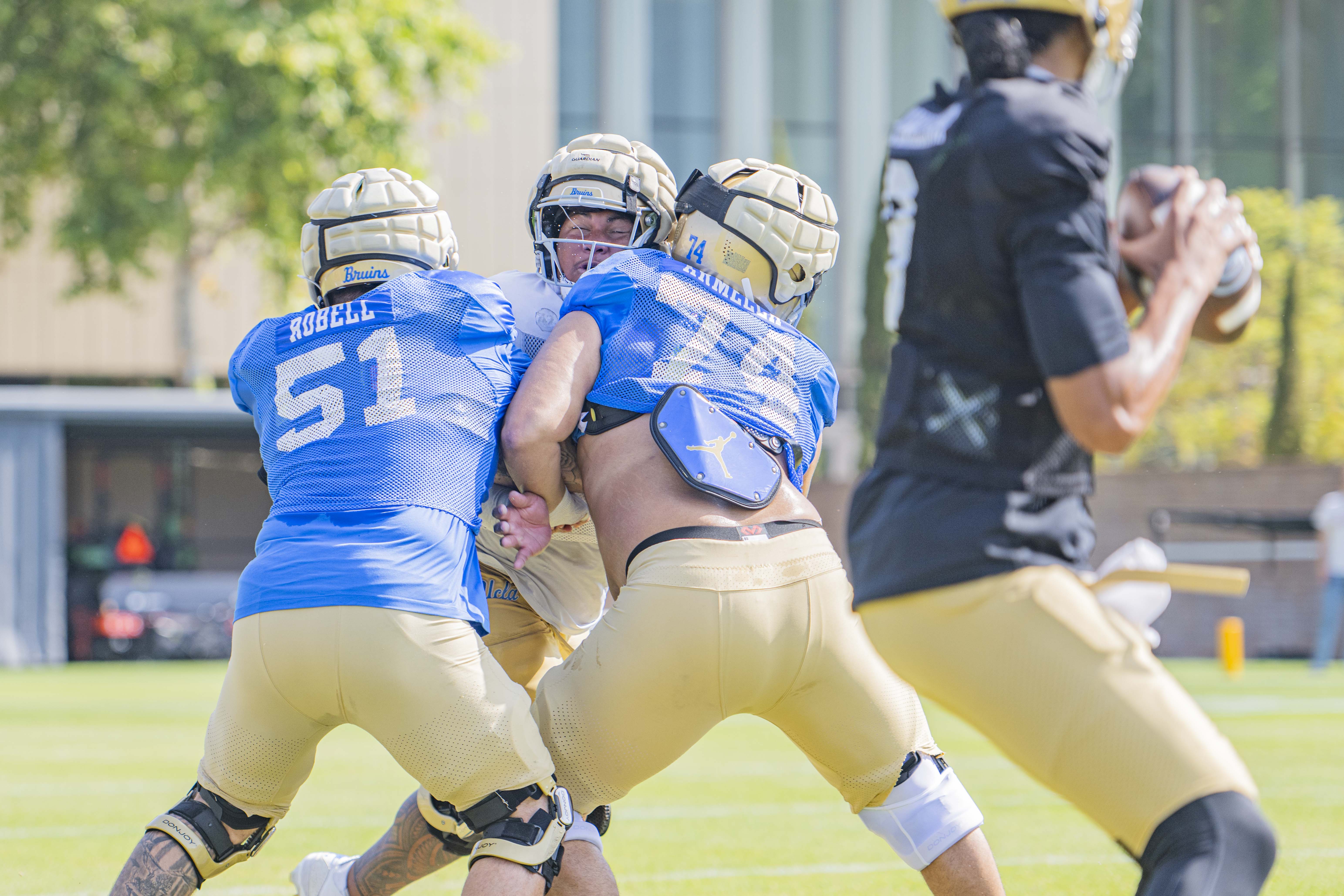
Senior running back Jaivian Thomas said the competition in the tailback room has allowed each player to build on one another rather than the constant jockeying for reps or the starting role.
Even in a room that features two starting running backs from 2025 – including Thomas, redshirt senior Anthony Woods and a Second Team AP All-American All-Purpose selection in redshirt senior Wayne Knight – the game has become not “How can I beat this person to the top,” but “How can we collectively get there?”
And this theme in the running back room is not an anomaly.
It has manifested itself in all areas of the gridiron.
“It’s super competitive, but having competition raises your play, and that’s something you dream about,” said redshirt junior defensive back Cole Martin. “Being at other places, when you have that competition, you see the play elevate, so being here and seeing how we’re working there in the spring, and we’re all bouncing ideas off each other, and we’re all trying to elevate each other. It allows us to buy in fully to the process because all we want to do is win at the end of the day.”
Chesney has also stressed that competition does not start and end on the grass.
It exists in every component of every player’s life.
Not just on the gridiron. Or in the weight room. Competition is centered on how players carry themselves, how they perform in the classroom and in the community.
In the Chesney era, the little things are the big things.
“His energy, every meeting, every practice – there’s nothing too small for him,” Taylor said. “He came in here, the first thing he talked about was, ‘We’re not going to win games unless we have a clean locker room and a clean weight room, so we’re going to have a competition on whose locker is the cleanest and whose rack is the cleanest in the weight room,’ starting at square one, and then just building its way up.”
The Bruins cannot win or lose any games until they start their season Sept. 5.
But Chesney is trying to build something bigger than one season of wins and losses.
He is creating a program, a community and a culture.
Something bigger than himself – a legacy.
And to win in January, you have to win in March, April and May.
“There are no days off,” Chesney said. “There’s no ability to come out here and take a play off. You set these standards. You live by these standards. You hold them accountable to these standards, not only the coaches and the players, but everybody that’s part of this program.”

Comments are closed.