
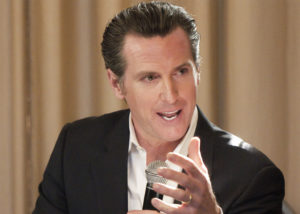
Four years into a five-year agreement between the UC and outgoing California Gov. Gavin Newsom, UCLA and the University are making pace with some of the compact’s outlined goals.
From growing in-state enrollment to increasing graduation rates, the UC has been working toward a set of goals in exchange for annual 5% increases in state funding. As Newsom’s second term as governor nears its end – his successor will be elected this November – the five-year compact agreed to in 2022 will soon expire with no clear replacement in sight.
Lawmakers first pushed for the compact to increase accessible and affordable higher education options for California residents.
The UC admitted a record-high number of California residents as first-year students for fall 2026, per the University’s admissions data released in late July. This also aligns with the UC 2030 Capacity Plan, which intends to increase California resident enrollment by 17,000 undergraduates.
The UC saw an increase in nonresident enrollment from around 2010 to the start of the compact, said Valerie Lundy-Wagner, the associate director of the Public Policy Institute of California’s Higher Education Center.
UCLA is among several UC campuses that have contributed the most to the University’s trend toward increased California resident enrollment.
Lundy-Wagner said Newsom and the UC reached the compact as the governor was heading toward a second term and focusing on longstanding challenges in California higher education. By pairing funding with the goal of increasing support for students, Newsom aimed to address accessibility concerns for the UC, she added.
“The state has provided less money to UC over the years, a trend that’s happened nationally,” she said. “The compact was supposed to provide funding stability.”
Candice Phan, a fourth-year sociology student at UC Davis and the president of the University of California Students Association, said she believes the growth of in-state enrollment requires an increased emphasis on student services and nontuition cost support to ensure access and affordability for UC students.
“I want equity and student support to be at the forefront of the compact if it occurs again,” Phan said.
One of the compact’s goals the UC did not meet was closing the gap in four-year graduation rates between underrepresented groups and their peers.
Phan, an employee at the UC Davis Student Recruitment and Retention Center, said she is worried the UC has not properly supported student success programming, especially following the UC hiring freeze that began in March 2025. Her university’s retention center had four full-time employees, and after one left, she said she was told there were no plans to hire a replacement because of the freeze.
[Related: UC implements systemwide hiring freeze following federal, state threats to budget]
“I understand the genesis of the hiring freeze, because of budget cuts and uncertainty from the Trump administration,” she said. “However, there seems to not be a sense of urgency or focus on this issue that is impacting students.”
Phan added that high tuition costs for nonresident students place a greater burden on them, and while she believes increased California resident enrollment is a noble goal, a better balance can struck be to support all UC students.
Phan also said she hopes to speak with lawmakers to urge funding increases for the UC.
“We hope that lawmakers take us seriously and understand that it is the state’s responsibility to support higher education and current and future generations of students,” she said.
Jayha Buhs Jackson – the president of the Undergraduate Students Association Council – said she is worried that as in-state students are further prioritized, international and undocumented students may lose protections and support, especially following UCLA’s recent pause on some international students’ work authorizations.
She added that she is worried about the potential financial impacts of increasing in-state enrollment, with the supplemental tuition rate for nonresident students standing at $39,270 for the 2026-27 academic year.
“There needs to be more financial transparency from UCLA and Governor Gavin Newsom on how are we going to be able to fiscally do this,” Buhs Jackson said. “How are we able to do this fiscally responsible to ensure that this doesn’t impact our university negatively in the long term?”


Comments are closed.