
Amid the ebbs and flows of a soccer match, controlling pace and tempo is crucial to forcing the tides of the game to stay in your favor.
UCLA men’s soccer (5-1-4, 2-1-2 Big Ten) will look to batten down the hatches as it faces Westmont (3-5-4, 1-1-1 PacWest) on Tuesday night at Wallis Annenberg Stadium. The game is the second of a three-game homestand for the Bruins before they travel back east.
For UCLA, calmer waters have generally come at home. The squad remains unbeaten across its five matches at Wallis Annenberg Stadium this season, posting a 3-0-2 record while allowing just three total goals – including the team’s second clean sheet of the season against No. 8 Michigan State in its previous match Saturday. In comparison, UCLA is 2-1-2 away, with its lone defeat of the season coming over 2,400 miles away from home at Rutgers.
This difference extends beyond just the results, however – it has been directly built into the success of the aggressive offensive style that eight-year coach Ryan Jorden has implemented among an experienced group. Across their five home contests, the Bruins have outshot opponents 80-27 – nearly tripling their opponents’ attempts – en route to outscoring their opponents 10-3.
While Michigan State tested UCLA more than any previous visitor – nearly matching UCLA’s first-half shot total of eight with seven of its own – it was ultimately outshot 18-13 on the night as UCLA pulled away for a 3-0 victory.
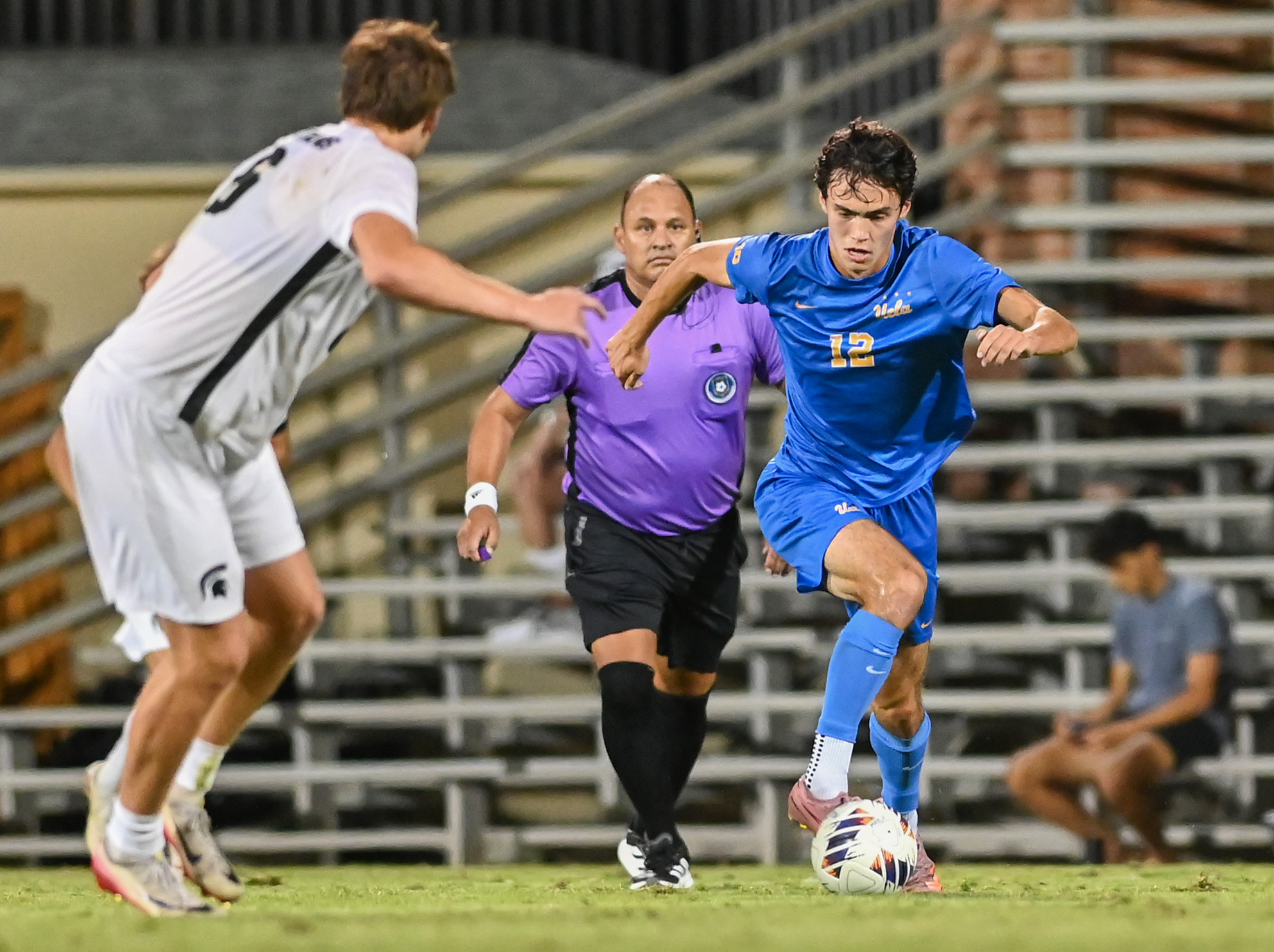
And with three consecutive matches at home coming at the heart of the season, UCLA has an opportunity to make another statement before its final two away games against two dangerous Big Ten opponents.
But while the Bruins have largely controlled the current all season, their ability to capitalize has not always followed suit. Through their first seven matches, the Bruins fired 94 shots but found the back of the net just 12 times – converting 12.8% of their attempts. UCLA’s most frustrating example came in a physical clash against Michigan, when the former outshot the latter 12-2 – including 9-0 in the first half – but had to settle for a 1-1 draw.
“We’ve had a team that’s capable of winning every time out,” Jorden said. “We’ve drawn a couple games that we were really disappointed in – a couple games where we outshot people mid-teens to two – and so for our guys, that feels like a loss.”
Since then, however, the tide has begun to rise.
After averaging 1.71 goals per game through its opening seven matches, UCLA has poured in nine goals across its last three – including two against then-No. 4 Maryland, four at Penn State and three more against Michigan State. While UCLA continues to hold a shot advantage on the season, outshooting opponents 144-96 in attempts overall and outshooting opponents in eight out of its 10 games this year, the squad spent much of September creating wave after wave of pressure to finally crash through.
This rising tide has hardly come from a single source. UCLA’s scoring surge is spread throughout the lineup, with junior defender Shakir Nixon – the squad’s leading scorer with five goals tallied – and junior midfielder Zach Neuls’ early-season production joined by former Third Team All-American junior midfielder Jaime Amaro, fifth-year forward Diego Castano and senior forward Oliver Roche.
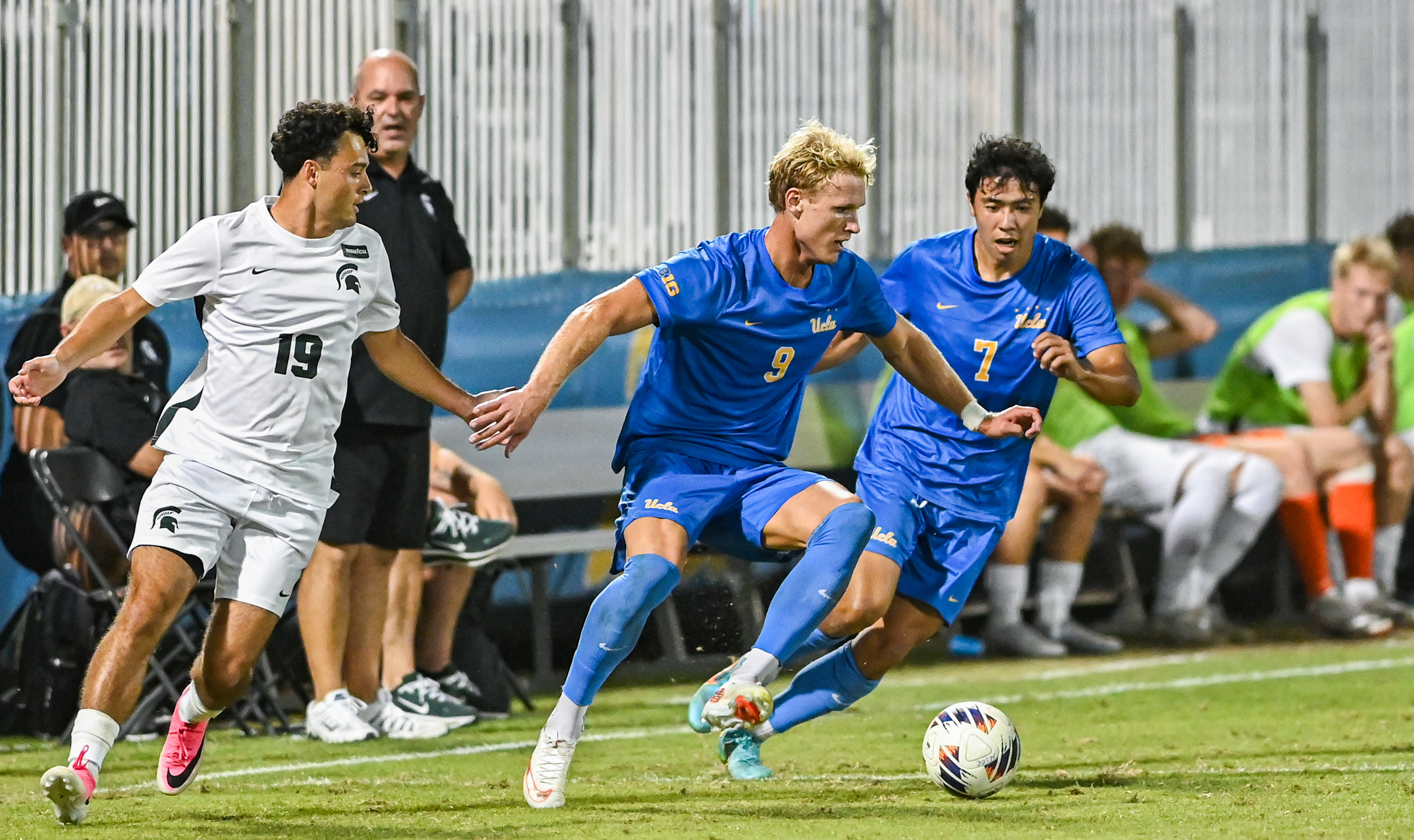
Amaro has found the net twice over UCLA’s last three matches, Castano has scored in back-to-back contests and Roche finally broke through against Michigan State after firing a team-high four shots, keeping the pressure on against an aggressive backline.
“I’ve been waiting a long time for the goal. … After my injury and coming back, I’ve had a couple chances (but) didn’t score. It’s really frustrating,” Roche said. “It’s just a relief in some way, but still also a hunger to get more.”
And if UCLA’s scoring current is beginning to pull from every direction, Westmont may not be the opponent best equipped to stem the tide.
The Warriors of the NCAA Division-II PacWest conference have surrendered 21 goals through their last 12 matches – an average of 1.75 per contest – while recording just one clean sheet. Opposing teams have converted 13.4% of the 157 shots against Westmont’s defense, a potentially dangerous figure against a UCLA attack that has showcased a flourishing ability to produce a voluminous attack and is beginning to find the efficiency it lacked earlier this season.
“The reality is, it’s trying to win every single game, and that’s the mentality the group has,” Jorden said. “We have the quality to do it, and it now comes down to, do we have the intensity, the organization, the execution to get the dub?”
However, Westmont has proven to be rarely content to simply weather opposing attacks.

(Elle Smith/Daily Bruin staff)
The Warriors have outshot opponents 168-157 so far this season, generating 14 attempts per match, and seven out of their last 11 matches have featured at least four combined goals, including four 2-2 draws and a seven-goal shootout against Vanguard. Much of that attacking threat has run through junior midfielder Cooper Mathews and senior midfielder Cole Lomeli, who have netted four and three goals, respectively.
Mathews has been Westmont’s most frequent trigger man, leading the team with 27 shots, while Lomeli has added two assists to his three goals for eight points. Lomeli also brings some familiarity with the Bruins, having found the back of the net against the Westwood side when the two squads met in 2024.
For the Bruins, Tuesday night presents an opportunity to prove their recent offensive surge is more than a hot streak. And while Westmont may be willing to ride the waves alongside UCLA, back in the calmer waters of Wallis Annenberg Stadium, the home side will look to prove it still controls the tide.
“There’s not a team that we shouldn’t be able to beat. Other than that, we should just take every game as it comes,” said senior midfielder Philip Naef after a two-shot and one-assist performance against Michigan State. “Like Ollie (Roche) said, we have a game on Tuesday. We need to win that.”



Comments are closed.