This story was updated Oct. 7 at 12:19 a.m.
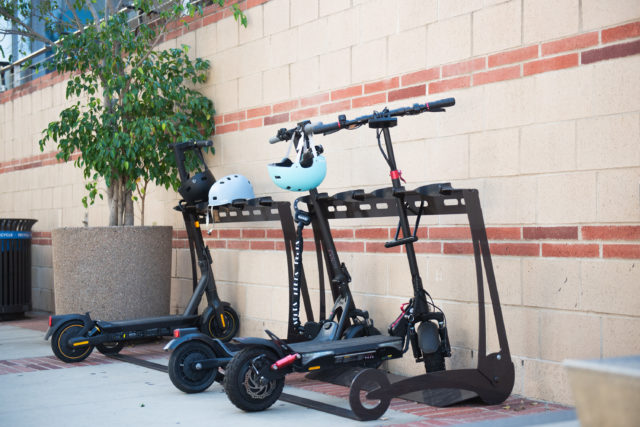
As UCLA prepares to enforce a new e-scooter registration rule starting Nov. 20, some students said they believe the policy will make campus safer – even if it means taking extra steps.
All personal electric transportation devices used on campus or stored in UCLA-owned housing must be UL-certified and registered with UCLA Transportation, UCLA announced in a January email to students. The certification confirms that the device’s electrical parts and battery have been tested to prevent mechanical shock, failure and fire.
Once registered, students will receive a registration sticker to put on their personal e-scooter, a UCLA Transportation spokesperson said in an emailed statement. It will help UCPD reunite lost or stolen e-scooters with their owners, they added.
[Related: UCLA announces registration, certification mandate for electric scooters, bikes – Daily Bruin]
The policy applies to all students, faculty and staff, said Michelle Sityar, chief of staff for administration and interim executive director of Events & Transportation, in a September email to students. Devices stored or charged in campus buildings must also be verified by UCLA Fire, Sityar added.
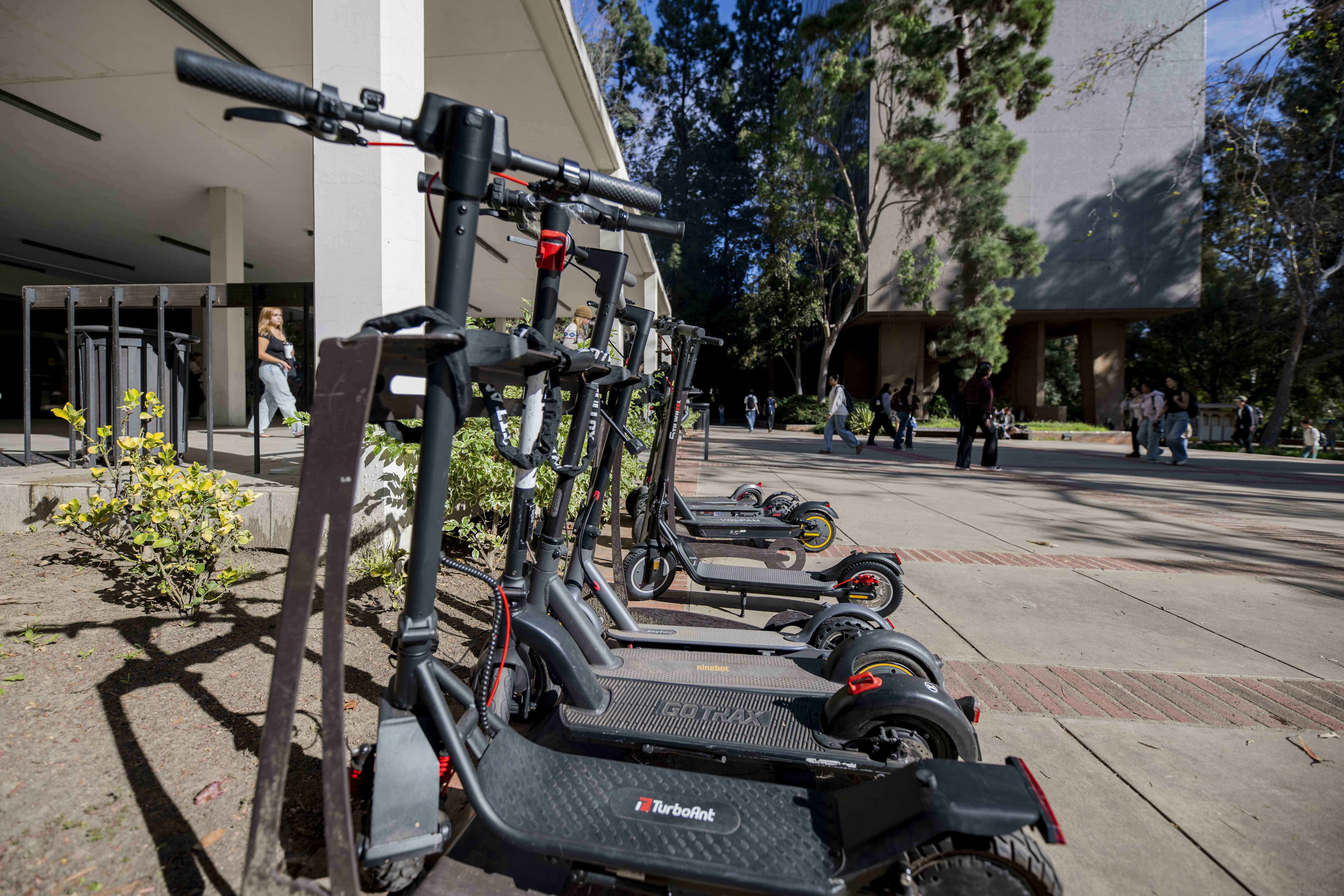
The policy reinforces rules for operating, parking and charging personal electric mobility devices, such as obeying traffic safety rules and preventing devices from blocking walkways, ramps and ADA access points, a UCLA Transportation spokesperson said in an emailed statement.
“Violations of the policy may result in enforcement actions consistent with UCLA policy, including relocation or impoundment of improperly parked devices,” the spokesperson said. “Students and employees who violate university policy may also be subject to applicable disciplinary processes.”
Jesus Gomez, a second-year mechanical engineering student, rode his scooter two to three times per week during his first year but has not ridden it this year because it is not registered yet.
Gomez said he understands why UCLA is implementing the policy, but it caught him off guard.
Other students said they see the requirement as a long overdue safeguard.
Pedro Magalhaes, a second-year music education student, said he supports the policy because his scooter was stolen last year. He added that he managed to recover it through UCPD, but the registration would have made the process easier.
Magalhaes bought his scooter to get groceries in Westwood and avoid a 20-minute walk from Hedrick Summit to campus.
“It’s just like a car,” he said. “There’s so much documentation for cars with registration and insurance that I think it’s reasonable to assume that a vehicle that can get up to a speed of fairly high caliber – especially on pedestrian areas – is required to get registered.”
Ismerai Calcaneo, a second-year physiological science student who has owned a scooter for two years, said she was skeptical of the policy at first, but she sees the benefits because many of her friends have lost their scooters.
Registering her scooter took about five minutes, and the process was easy to understand, she added.
Gomez, who has used Bird scooters and Waymo rides instead of registering his scooter, said he expects that some students won’t comply with the policy because of the inconvenience.
“It’s very difficult to enforce such a widespread thing, especially considering how much people have e-scooters,” he said. “How are they going to know if someone owns an e-scooter and it’s registered or not?”


Comments are closed.