This post was updated Oct. 20 at 10:32 p.m.
UCLA students who experience sexual assault must travel more than four miles off campus to access a rape kit.
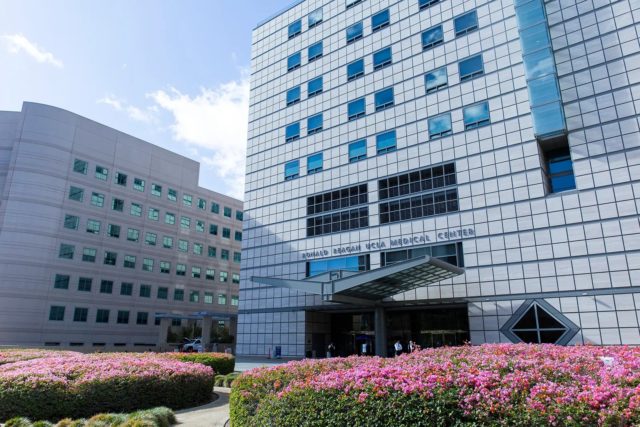
That’s because the university’s on-campus hospital, the Ronald Reagan UCLA Medical Center, doesn’t offer sexual assault forensic examinations, colloquially known as rape kits. The university instead partners with Santa Monica Rape Treatment Center to provide such care – which is about a 20-minute drive from campus.
Having biological evidence increases the odds of a sexual assault conviction by more than nine times, one study found. Still, UCLA students are far from alone – only one California college, UC Irvine, offers forensic examinations on campus.
“Having that option, being able to process that fast enough to be able to gather evidence and things like that, that does great for you in court,” said Danica Jauregui, a third-year psychology student and rape survivor. “As sad as it is, it can be very validating for survivors – having that evidence and being able for it to be collected by professionals.”
During the procedure, a sexual assault nurse examiner collects biological samples from a survivor’s body, checks for injuries and recommends mental and physical aftercare. The specialized training and clinical experience required to become a SANE, coupled with the ongoing national nursing shortage, have also limited the availability of these examiners, said Jennifer Wagman, an associate professor at the UCLA Fielding School of Public Health.
California permits other appropriately trained healthcare professionals, including physicians and physician’s assistants, to perform a SAFE, Wagman said. However, hospitals must first prioritize assigning these clinicians to forensic exams, she added.
Regardless of the distance, the Santa Monica Rape Treatment Center is a valuable resource for students, Wagman said. Advocates laud the 24/7 center for its free, trauma-informed services including medical care, forensic exams and counseling. But that pioneering care doesn’t mean an on-campus option wouldn’t be beneficial, Wagman added.
“I do think that creates a barrier for some people who may be more likely to go,” Wagman said.
The university offers free transportation to the Rape Treatment Center, which students can access by contacting the center or UCPD, a UCLA spokesperson said in an emailed statement. The Ronald Reagan Medical Center’s emergency unit can also coordinate transportation for survivors, they added in the statement.
Kat Contreras – the policy director for IGNITE at UCLA, an organization that advocates for reproductive justice – said the organization no longer pushes for the Ronald Reagan Medical Center to offer rape kits. IGNITE believes it isn’t feasible for the hospital to offer the same comprehensive post-assault resources as the Santa Monica center, she said. Contreras also noted that UCLA’s nearest treatment center is located relatively close to campus compared to other UCs.
“It would take so much time and so much money to develop a program that is as sufficient as the Santa Monica Rape Treatment Center,” Contreras said. “In an ideal world, if we had enough money and enough time and enough support, we would of course love for there to be a rape treatment center at every single hospital.”
Jauregui said she was surprised to learn that Ronald Reagan doesn’t offer the procedure, especially given her participation in organizations such as Survivors + Allies, a group that advocates for survivors of sexual assault.
She said she believes that even if UCLA can’t provide rape kit services at Ronald Reagan, it should do more to advertise that students must travel to Santa Monica for care. About 81% of UC students don’t know their university offers free transportation to a forensic exam, as required by California law, according to a recent Survivors + Allies report.
“Other survivors that I talked to did not know that was something you have to do,” Jauregui said.
UCLA’s goal should be to eliminate as many barriers to care as possible for survivors of sexual assault, she added.
“Imagine this really traumatizing thing happening to somebody, and then saying, ‘Okay, well, now you’ve got to travel and meet all of these people, and go to this city that maybe you’ve never been to before,’” Jauregui said. “I understand completely why we don’t do testing at Reagan – but also, I really think we should.”




Comments are closed.