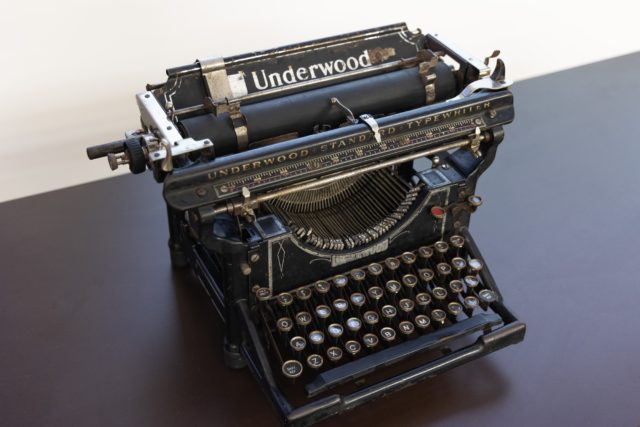
For once, the loudest voices in the library belonged to machines.
The Type-In at the Library: Typewriter Extravaganza invited visitors to trade screens for paper at the Charles E. Young Research Library. UCLA Library and UCLA Writing Programs hosted the event at which more than eight manual and electric typewriters rested on tables for attendees to try, while those who brought their own machines could seek advice at a repair station operated by Michelle Brasseur, a teaching and learning librarian for humanities and social sciences. The drop-in extravaganza coupled demonstrations and maintenance tips, which were shared at the top of each hour, introducing attendees to the mechanics behind the keys. Poets, stationed at the back of the room, also composed original pieces on the spot for visitors to take home.
“I want students to take a break from a screen and experience writing analog-style and also have a chance to talk to other people,” Brasseur, the event’s organizer, said. “Technology – newer technology – can be kind of alienating.”
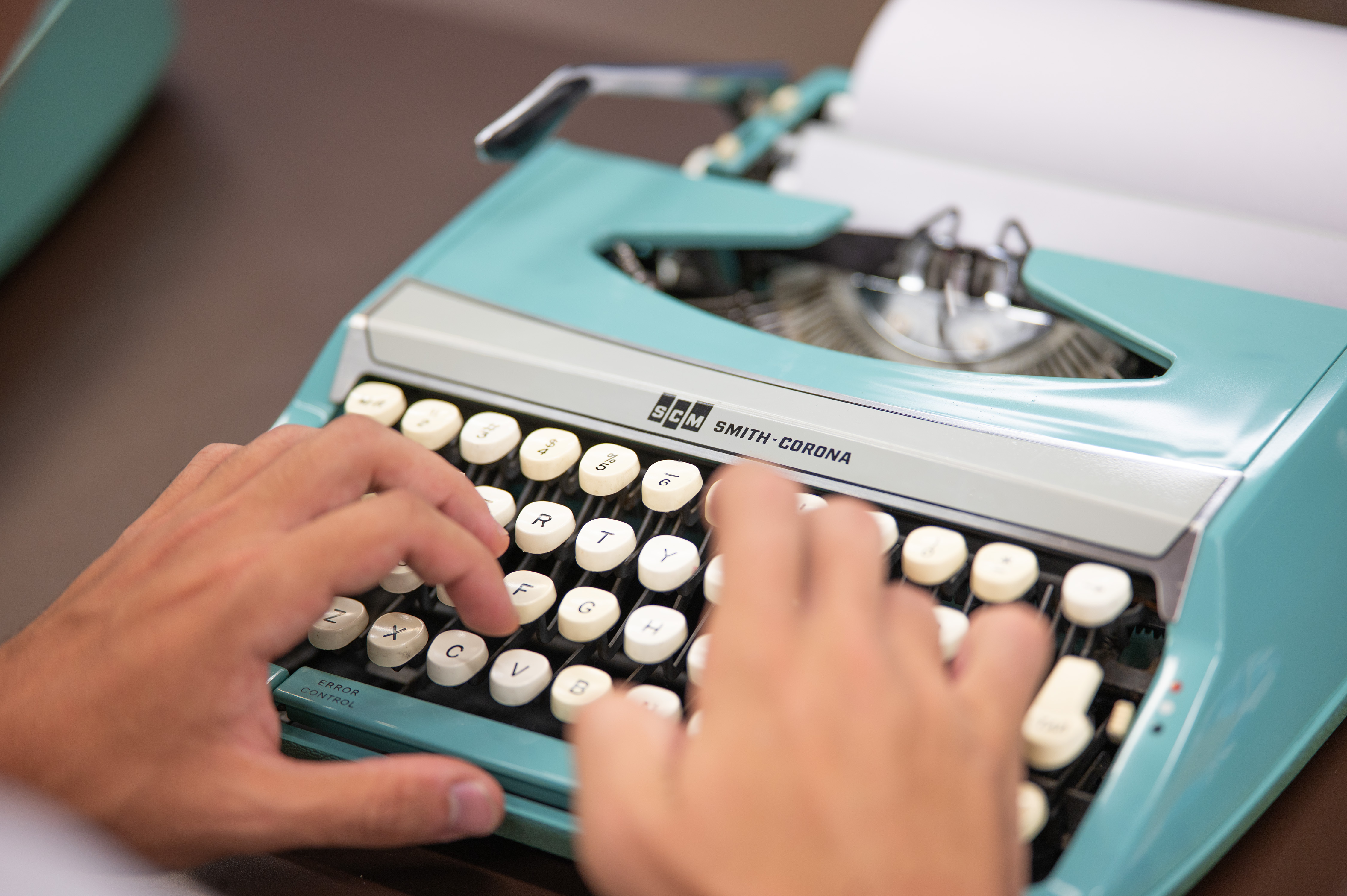
Brasseur said her interest in typewriters began with an aqua-colored Smith-Corona Sterling, a vintage portable typewriter sought by many collectors, which she bought on eBay. After learning to clean and repair it by watching YouTube videos, she added that she began acquiring other machines, including some that no longer worked. Over roughly nine months, her interest grew into a collection that included machines she purchased in nonworking condition and taught herself how to fix, Brasseur said.
“There are all these broken typewriters, and I want to save them all,” she said. “I don’t want them to end up in landfills.”
For Crow Villanueva, a second-year sociology student, a poster in Royce Hall inspired them to attend the event, they said. Having used a typewriter only once before at a friend’s house, Villanueva added that they were a casual typewriter enthusiast, drawn to older ways of writing.
[Related: Bruins bond over global flavors, performances at International Food Festival]
“I’m not particularly fond of modern, low-profile, slim keyboards,” Villanueva said. “The clack-clack sound is delightful.”
At the extravaganza, Villanueva said they tried both an electric Brother and a manual Smith-Corona typewriter. Alongside test phrases, they mostly typed their thoughts as they came, though a broken F key on one typewriter required them to rethink sentences before committing them to paper, Villanueva added. That need to work around the machine offered a more deliberate process than the constant revision a computer allows.
“Being able to backspace leads me to overthink my words,” Villanueva said.
For attendee and poet Izzy Bedichek, using a typewriter forces her to slow the pace of her writing progress. He said he typically wrote by hand before moving to a computer to edit but had struggled with writing growing up. The physical effort of pressing the older machines’ keys provided a less intimidating way to approach the page, making their writing more deliberate.
“On the typewriter, you don’t see the blank part of the paper – all you see is what you’ve already written,” Bedichek said. “You see what you’ve written grow.”
Having recently moved to the area after receiving a master’s degree from Northeastern University, Bedichek said she found the event through the library website while seeking opportunities to connect with other poets. He added that he had been writing poetry for five years, though poetry-specific groups could be harder to find than communities devoted to other forms of writing.
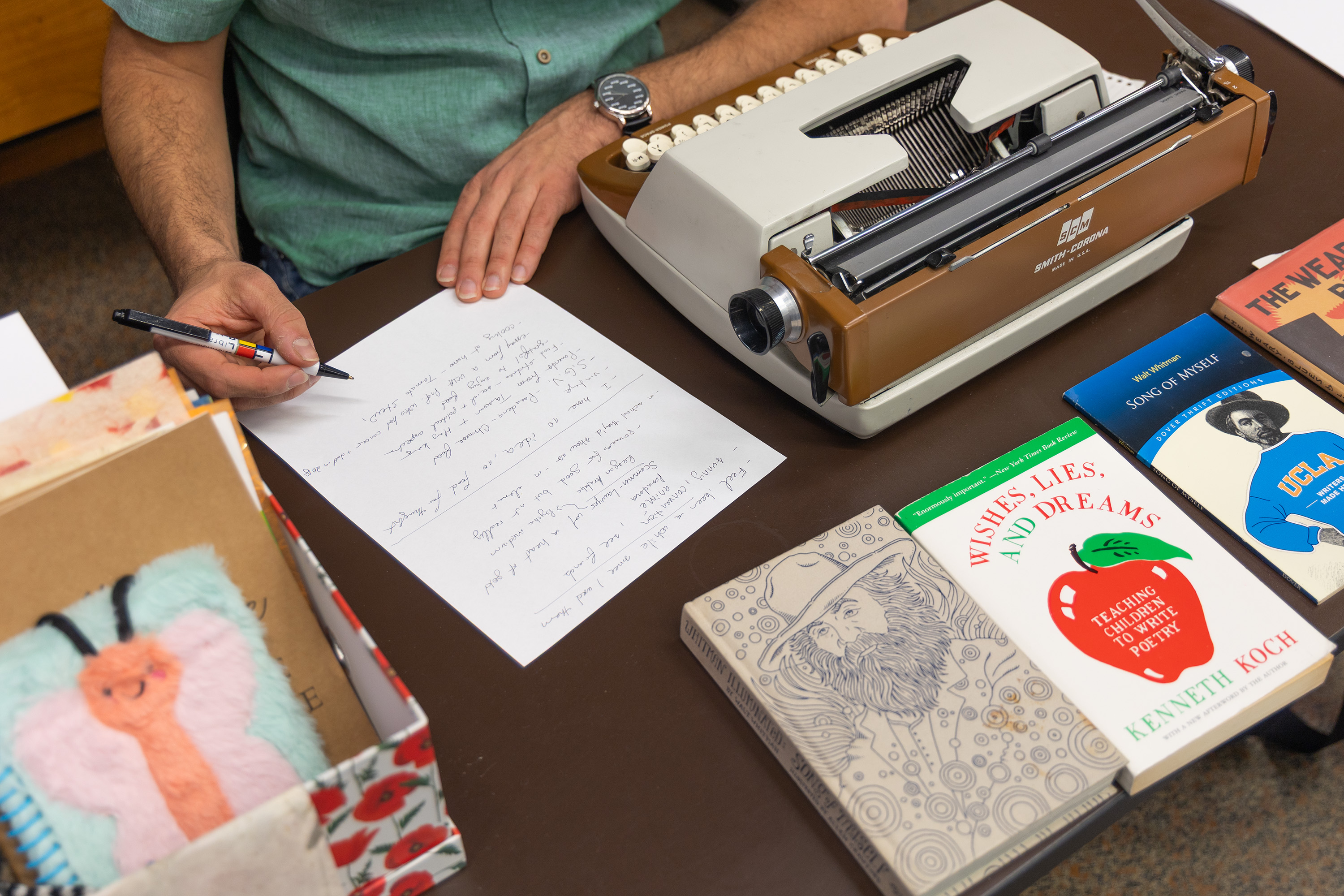
At the poetry table, writing programs lecturer Amber West was one of three poets who chatted with attendees and crafted pieces for them on typewriters and by hand, drawing inspiration from their conversations. West said Brasseur approached her over the summer about collaborating on the event, and she suggested composing live poems, something she enjoyed doing at previous events.
[Related: From cosplayers to comic authors, L.A. Comic Con celebrates human-made creativity]
West said she often began by asking visitors to select a phrase and a poetry book from several on the table, using their brief conversation to gather more material. After jotting down notes, she looked for phrases, images and ideas that began to take shape. The spontaneity made the encounter feel like fortune-telling, she said.
For West, writing a poem for someone in the moment supplies a different kind of connection from reading a finished work on the page. She said poetry could feel private or distant when readers encounter it when it was written by a famous or long-dead author, rather than something created just for them.
Bedichek also saw an opportunity to connect through exchanging language. Having drafted a poem before meeting with one of the poets for a collaborative free response writing exercise, she said the same words, interpreted by a different poet, could take on alternate meanings in ways she had not considered. His poem – an exploration of girlhood and femininity – became a reflection on systems and society, he added. The gathering extended the chance to not only try a typewriter but also to connect with another writer through their work.
“I wish I could clone myself so that I could be all around the room and talk to everybody at once,” Brasseur said. “Maybe we’ll do it again sometime.”


Comments are closed.