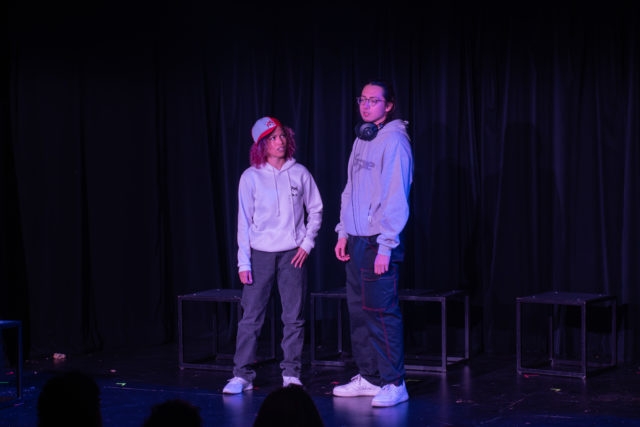
The Bruin Fringe Festival takes students from the periphery to the stage, spotlighting emerging voices in live performance.
Known for being accessible, unjuried and uncensored, the Bruin Fringe Festival allows undergraduate playwrights, directors, designers and other creatives in the School of Theater, Film and Television to showcase their work, ranging from musicals and short plays to improv sets. The festival has three bills – curated blocks of performances – which run Thursdays through Saturdays from Nov. 5 to Nov. 21.
“The act of actually having original work that has been written by a student, entirely produced by student designers, student actors, that is the sort of unique opportunity that Fringe Fest offers in a way that is sponsored by the department,” said Ruby Taylor, a third-year theater student.
The festival has grown significantly because playwright demand and audience turnout and is now in its fifth year. Each bill used to hold three shows, but for this iteration, each is composed of four or five because more students submitted work than ever before, said Eddy Ruiz, a third-year theater student.
The festival is a chance for students to present diverse works while receiving funding and support from the Department of Theater, Ruiz added. It also allows the audience to see the works free of charge, Taylor said.
For her piece, “Nominative Determinism,” Taylor said she was the sole playwright and crafted a story that explores love in the digital age through a queer lens.
Staging a play that takes place largely online posed a challenge, Taylor added. The 20-minute piece, which she had to cut from 30 pages to 19 to fit the festival’s guidelines, relies on projections of the characters’ text messages behind the actors, rather than props, she said.
[Related: Live from UCLA, it’s Westwood Night Live: Student comedy show returns for more]
“On the one hand, I love experimenting with theater and how we can incorporate intensely modern ideas,” Taylor said. “On the other hand, I hate plays that are like, ‘Let’s all stare at our phones,’ so I did not want to do that.”
The cast jokingly refers to it as “the 2020 Discord play,” Taylor added, because it was heavily inspired by the COVID-19 pandemic, when teenagers stayed up to browse the internet.
The festival is all about collaboration, Taylor said. Beyond sound designing for her own show, Taylor also worked on two of her peers’ plays. Since the writers were all featured on Bill Two, they coordinated on the optimal way to present their pieces to the audience, she said.
Ruiz, another Bill Two writer, said the festival relies on cooperation between participants. Ruiz’s play, “isatape,” follows two characters, Blue and Green, who never truly get to know each other despite repeatedly meeting in their workplace cafeteria located within a nuclear power plant. “isatape” ruminates on misconnections and the ways that humans often incorrectly perceive one another, Ruiz said.
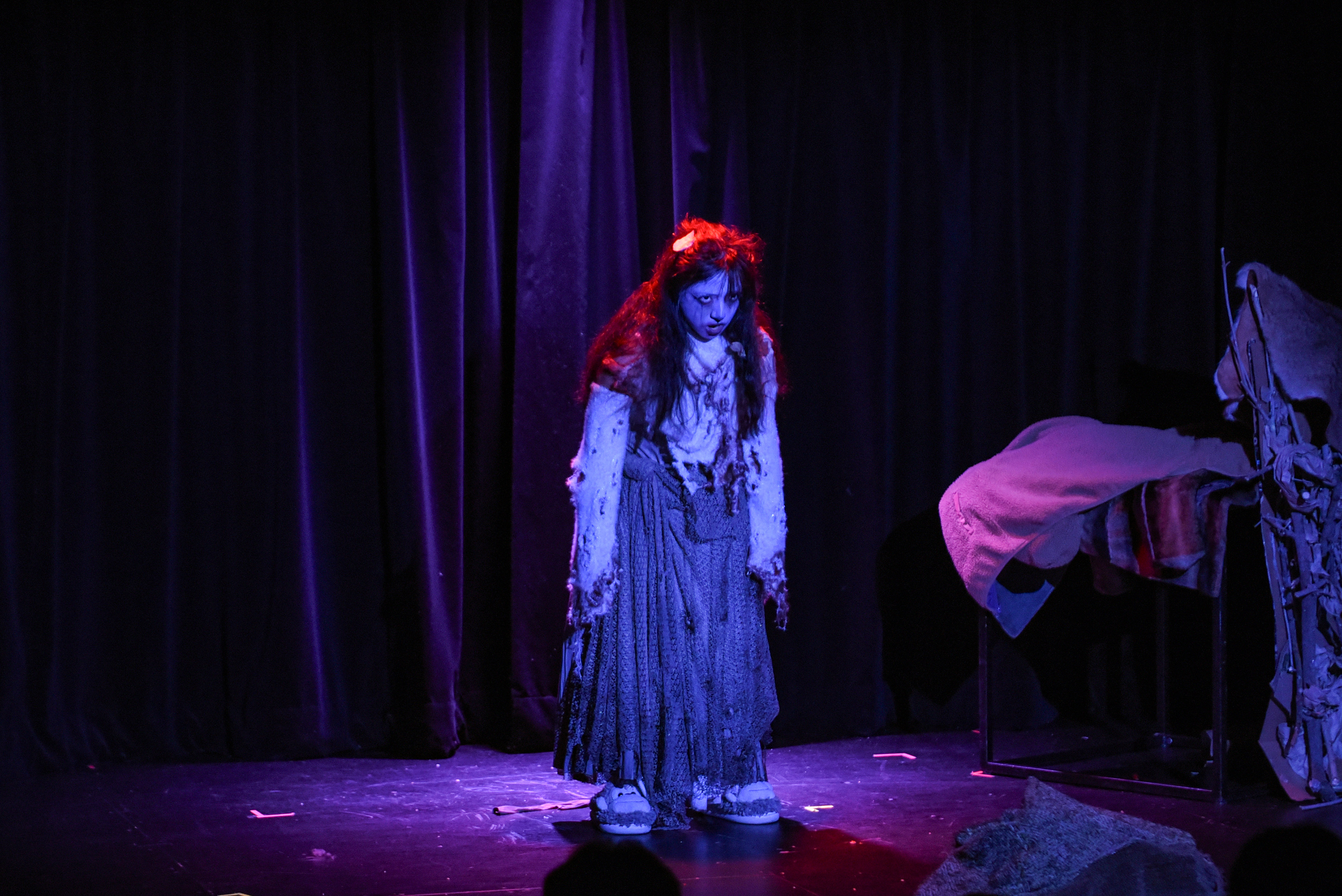
“What’s something really mundane that I can turn into something important?” Ruiz said. “It’s almost silly, the way that a lot of the dialogue in this play – they’re not talking about something extremely important, but it’s also the most important thing because they’re the only people in this world, in this universe.”
For Ruiz, the festival has also allowed them to highlight the work of trans playwrights like themself, including fellow Bruin Fringe Fest playwrights Surya Uniyal and Taylor. Ruiz added that the second bill consists of multiple pieces of theater made by trans playwrights, a demographic that is often underrepresented in the industry.
“When it comes to trans theater, I just feel like there’s just not enough, ever,” Ruiz said.
Samantha Kimball, a fourth-year theater student, said she made her debut as a director by writing and directing “Malachi,” which was featured on Bill One. The story follows an orphan who learns he is a crown prince, which forces him to deal with new dimensions to his identity, she added.
“Being a playwright, you get to be in the dark and be writing and coming up with it,” Kimball said. “Now I see it more like I’m stewarding a piece of art than being in the super nitty-gritty of making it exactly how I initially intended it.”
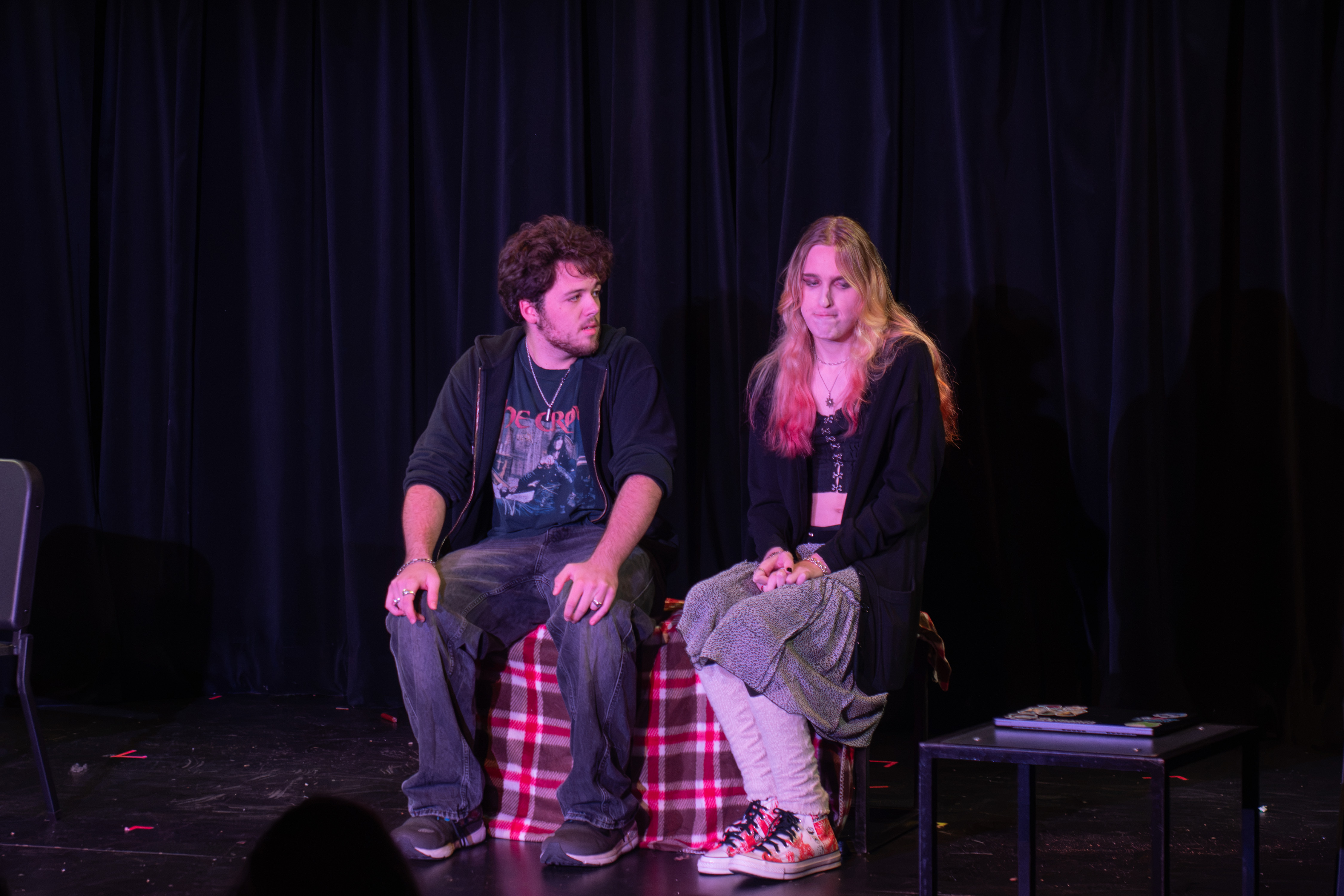
Staging a medieval quest on a $100 budget from UCLA meant improvising, she added. Kimball pulled costumes from her own closet and her actors’ wardrobes. She used the funds she received from the department to purchase prop swords and compose a minimalist set, she added. The rest, she said, was left to the audience’s imagination.
Kimball said anyone interested in the festival, or student theater as a whole, should come and watch. Attending the shows is a great way to support original theater in the UCLA community that students can resonate with.
“My protagonist is the kind of person who feels like he’s living his life for other people and doesn’t really know his true will,” Kimball said. “I wrote the play for everybody that’s struggling with the same thing and wants to trust themselves.”



Comments are closed.